

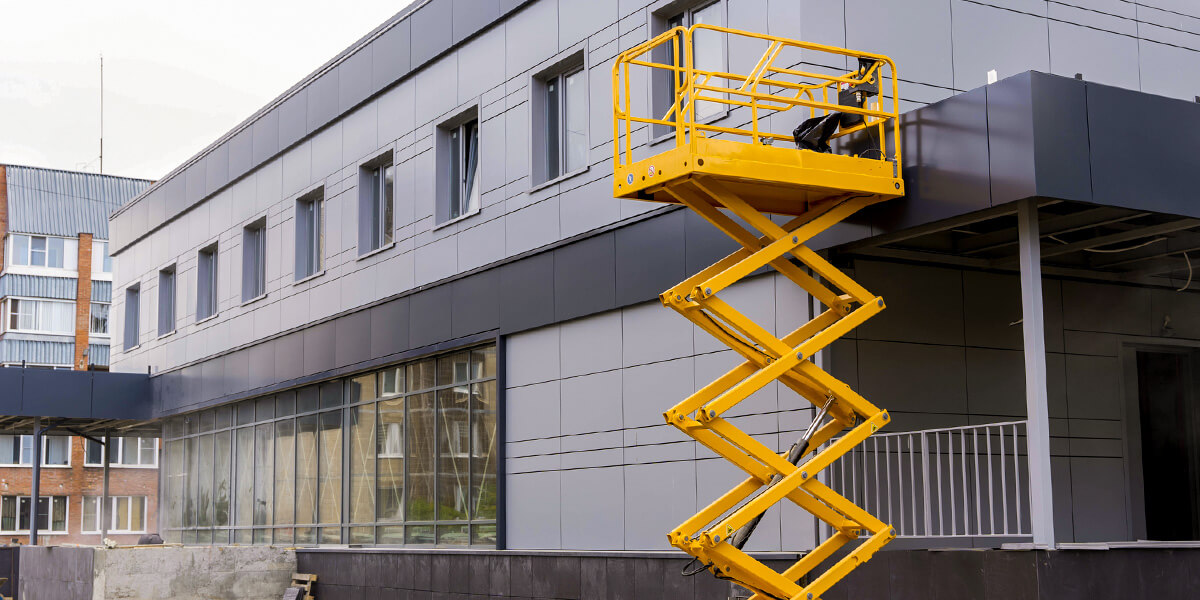
Working at elevated heights is common in construction, maintenance, warehousing and industrial sites. While ladders and scaffolding were once the main choices, many teams now use aerial equipment to work more effectively and safely access high places.
Aerial equipment includes various machines that lift workers and their tools to perform tasks overhead. Choosing the right type is important. An unsuitable lift can slow progress, restrict access or create safety risks. The right lift helps crews reach their work quickly, move confidently and stay productive.
Explore the different types of aerial equipment and their typical uses in this guide.
What Are Aerial Lifts?
Aerial lifts are machines designed to lift workers to perform tasks at height. They provide temporary access to elevated areas that would be hard or unsafe to reach from the ground. You might also hear aerial equipment referred to as aerial work platforms (AWPs) or mobile elevating work platforms (MEWPs).
Unlike cranes or forklifts, which primarily move materials, aerial equipment is designed for personnel access. Common uses include construction, building maintenance, electrical work, warehouse operations and industrial inspections. The wide variety of aerial lifts allows crews to select equipment that fits the jobsite, working height and access needs.
Different Types of Aerial Lifts
Aerial equipment comes in several categories, each tailored to meet different jobsite needs. Knowing how these machines differ makes it easier to pick the right lift for your application. The most common types of aerial lifts are:
Plataformas elevadoras
Boom lifts offer both horizontal and vertical reach, making them ideal for accessing elevated areas that are hard to reach from below. They are also available in a range of power options, including electric, diesel, propane and gas models. Depending on the model, boom lifts generally provide working heights ranging from about 30 feet to over 150 feet and are often found on large outdoor jobsites.
There are two main types:
- Telescopic (straight) boom lifts are made for direct vertical and horizontal reach in open jobsite environments. These lifts extend outward in a straight line, allowing operators to quickly access elevated work areas without having to maneuver around obstacles. Straight boom lifts usually offer platform heights from about 40 to 150 feet, depending on the model. Since they move in a fixed path, they are best for projects that need maximum reach across open spaces.
- Articulating boom lifts have multiple hinged sections that bend and rotate. This design enables access to tight or complex work areas that straight booms cannot reach directly. These lifts typically provide working heights between roughly 30 and 135 feet and come in electric and rough-terrain configurations. Articulating boom lifts are often used in confined spaces, indoor facilities and jobsites with obstacles, where precise positioning and maneuverability are crucial.
Elevadores de tijera
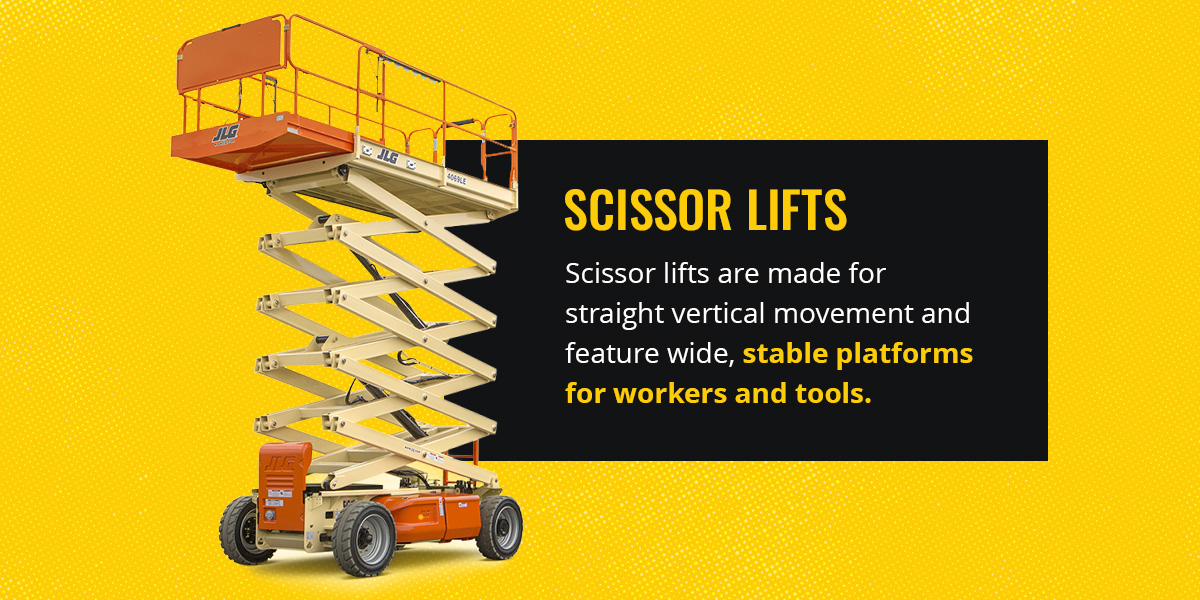
Scissor lifts are made for straight vertical movement and feature wide, stable platforms for workers and tools. Most scissor lifts have working heights between about 10 and 40 feet, making them a reliable choice for jobs that need steady access at moderate heights.
Common scissor lift types include:
- Electric scissor lifts: Perfect for indoor or finished spaces, electric scissor lifts run quietly, emit no harmful gases and often have non-marking tires. Typical working heights range from 19 to 32 feet and handle between 500 and 800 pounds. Platform capacities usually support one or two operators along with their tools.
- Rough-terrain scissor lifts: Made for outdoor jobsites with uneven ground, these models typically use diesel or gas and have four-wheel drive, increased ground clearance and strong platforms. Working heights can reach up to 40 feet. They have much higher platform capacities for heavier materials and crews.
- One-man lifts: These are small scissor-style platforms designed for one operator. Their narrow design lets them go through doorways and tight aisles. They are useful for indoor maintenance, inspections and light service work where space is limited.
The main difference between a boom lift and a scissor lift is reach and movement, with boom lifts offering horizontal access and scissor lifts providing stable, vertical elevation.
Towable Man Lifts
Towable man lifts are lightweight boom lifts that can be towed behind a standard pickup truck or SUV to reach elevated work areas. They usually provide working heights of about 35 to 50 feet and are often used for building maintenance, sign installation and light construction.
Since they are towable, these lifts are handy for contractors who need mobility without moving a full-size boom lift. Many models come with outriggers for extra stability during use and are available in electric or gas-powered versions.
Vertical Mast Lifts
Vertical mast lifts, also known as personnel lifts, are compact machines built for straight vertical access. Unlike towable lifts, they drive themselves and are mainly used indoors.
These lifts typically reach heights of about 15 to 35 feet and have a narrow design that allows them to fit through standard doorways and tight aisles in warehouses. Vertical mast lifts are best for facility maintenance, retail spaces and light indoor tasks where maneuverability and compactness are important.
Cargadoras telescópicas
Telehandlers are flexible machines that offer both vertical and horizontal reach, generally ranging from about 20 to 65 feet. They are mostly used for moving materials on construction sites.
While telehandlers can be equipped with approved personnel work platforms for some uses, this requires manufacturer approval, proper setup and suitable jobsite conditions. Not all rental companies have personnel platforms for telehandlers.
Telehandlers are most often used for lifting and placing materials, making them a practical choice for jobs that need reach and lifting power in one machine.
Choosing the Right Aerial Lift
Deciding what kind of lift you need depends on various factors such as height requirements, jobsite conditions and how the equipment will be used. The equipment you select affects productivity, access and overall jobsite safety.
Consider the following factors when selecting the safest and most effective solution:
- Height and reach requirements: Determine the total working height required, including the maximum reach above the platform. If the job involves reaching over obstacles or accessing high areas from a distance, a boom lift with horizontal reach may be needed. Vertical access is usually managed by scissor lifts or vertical mast lifts.
- Indoor versus outdoor use: Indoor jobs often need electric-powered lifts that produce no emissions and operate quietly on smooth surfaces. Outdoor sites may require rough-terrain equipment with better traction, stability and weatherproof parts.
- Terrain and ground conditions: Smooth, level floors are suitable for slab scissor lifts and compact machines, while uneven or sloped ground calls for rough-terrain lifts or tracked equipment designed for stability on difficult surfaces.
- Power source considerations: Aerial lifts come in electric, diesel, gasoline and propane options. The choice of power affects emissions, runtime, noise levels and suitability for indoor or outdoor use.
- Platform capacity and workload: Load capacity must consider workers, tools and materials. Scissor lifts usually support heavier platform weights, while boom lifts have lower capacities but provide greater reach flexibility.
- Safety requirements: Jobsite hazards, overhead obstructions and fall protection needs should be evaluated before equipment selection. Choosing the right lift helps reduce risk before the operation begins.
Once you’ve selected the appropriate aerial equipment, safe operation becomes the primary focus. Proper inspections, operator training and understanding of jobsite conditions help ensure the lift works as expected. These steps protect crews, equipment and timelines before any work at height begins.
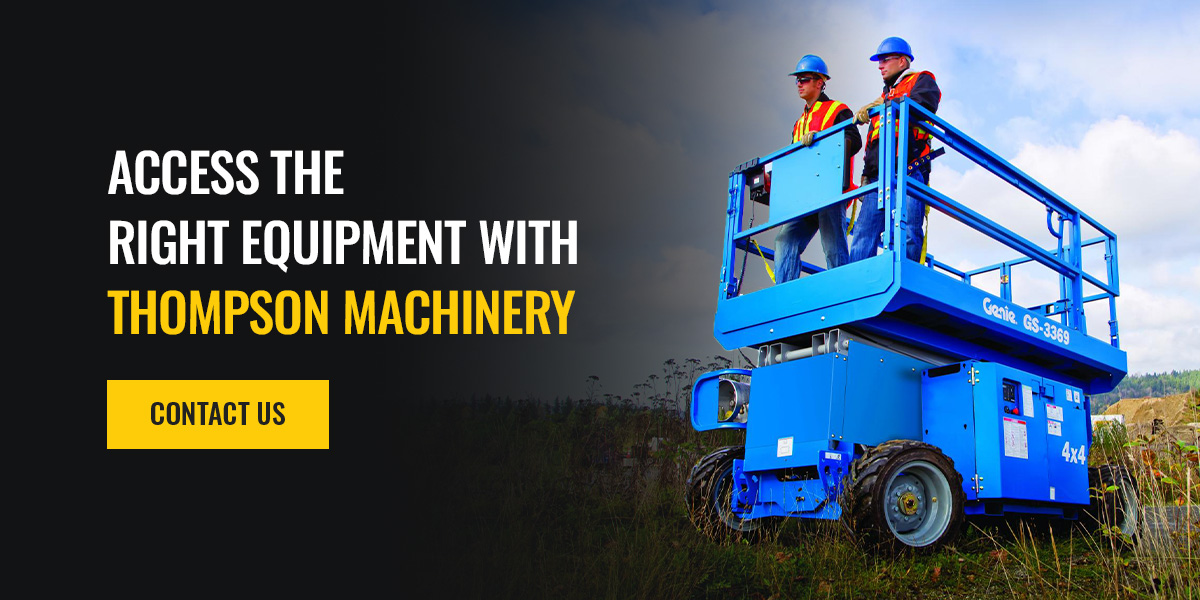
Access the Right Equipment With Thompson Machinery
Choosing the right aerial equipment is crucial for jobsite safety, productivity and efficiency. Whether your project calls for vertical access in tight indoor spaces or extended reach for outdoor work, having the ideal machine is essential.
Thompson Machinery offers a wide range of reliable aerial equipment rentals to support projects of all sizes. With experienced specialists and flexible rental options, your local team can help you find the right lift for your height, reach, terrain and workload.
Contact Thompson Machinery today to talk with a rental expert, and get the aerial equipment you need to keep your project moving forward with confidence.