

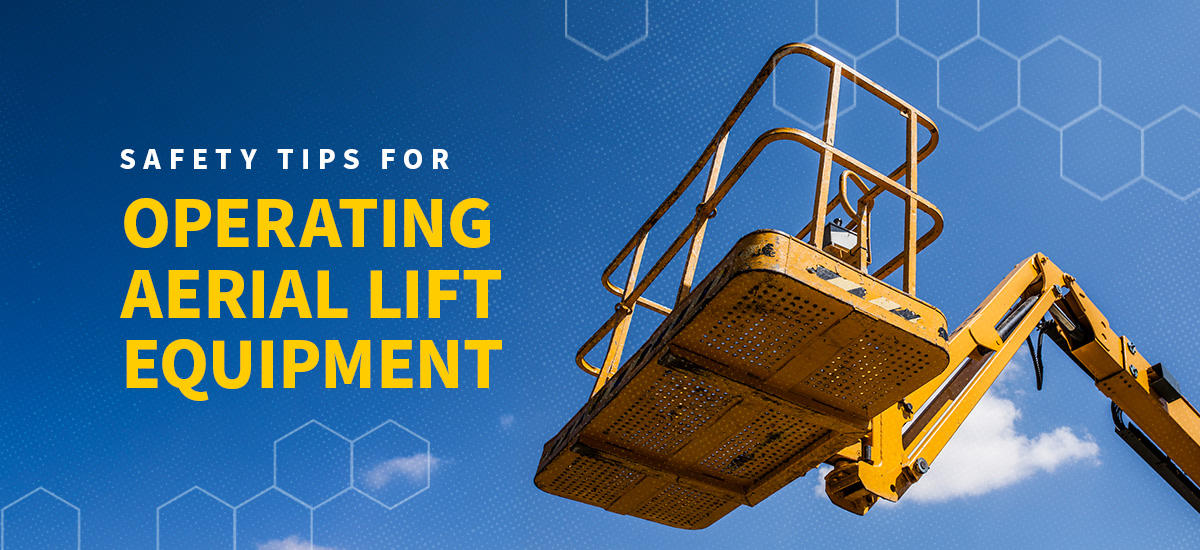
When you have a job in a hard-to-reach area, aerial lifts are invaluable, but only if you operate them safely. Following the best practices for operating aerial lifts maximizes your uptime, protects workers and ensures compliance. This guide provides actionable aerial lift safety tips to help you get the job done right.
The Importance of Aerial Lift Safety
Prioritizing safety protocols ensures your crew goes home safe every day. Here’s why you should prioritize proper training and safety when using aerial lifts:
- Protect your crew: Putting safety first gives your crew the awareness and tools to help prevent life-altering injuries and fatalities.
- Avoid downtime: Protecting your workers from injury means you can maximize uptime. Preventing accidents helps minimize project delays and eliminate potential fines. Safe and proper use of equipment also preserves your aerial lift’s longevity. All these safety factors impact your bottom line.
- Meet safety standards: Adhering to Occupational Safety and Health Administration (OSHA) requirements is mandatory. Staying compliant means you avoid fines and potential shutdowns. You should also consider American National Standards Institute (ANSI) standards, which OSHA often references.
Pre-Operation Best Practices for Operating Aerial Lifts
Every safe lift begins on the ground, long before you raise the platform. Check your aerial lift and the area you’re working in.
Perform a Daily Walk-Around Inspection
Take a few minutes to inspect your aerial lift before every shift. Walk around the equipment and check the following:
- Tires and wheels: Confirm that your tires have enough tread and pressure. Look for cuts, gouges or any other damage. For solid tires, check for excessive wear or chunking.
- Chassis: Look for cracks, dents or other damage.
- Fluid levels: Assess your hydraulic system, fuel and engine coolant levels and top them up where appropriate according to your manufacturer’s recommendations.
- Structural damage: Examine your aerial lift’s platform, guardrails, boom or scissors arms for damage.
- Leaks: Check under and around your aerial lift for signs of a hydraulic or fuel leak.
If you or your workers find any issues during equipment inspection, remove the aerial lift from service until it is safe to use again.
Test All Functions and Emergency Controls
Testing your lift’s controls every day before use is an OSHA requirement. Operate the controls from the ground and test the lift’s primary functions. Then, test them from the operator’s platform. Ensure the emergency stop button is working and test for auxiliary power so you can lower the lift if the main engine fails.
Survey the Work Area for Hazards
Before you move the aerial lift, scan your work area for potential hazards. Hazards can destabilize your machine, cause overhead obstructions or pose electrocution risks. These include:
- Slopes
- Drop-offs
- Holes
- Debris
- Overhead obstructions
- Power lines
Common Hazards and Key Aerial Lift Safety Tips
Know the most common hazards associated with aerial lifts so you can prevent them.
Tip-Overs and Collapses
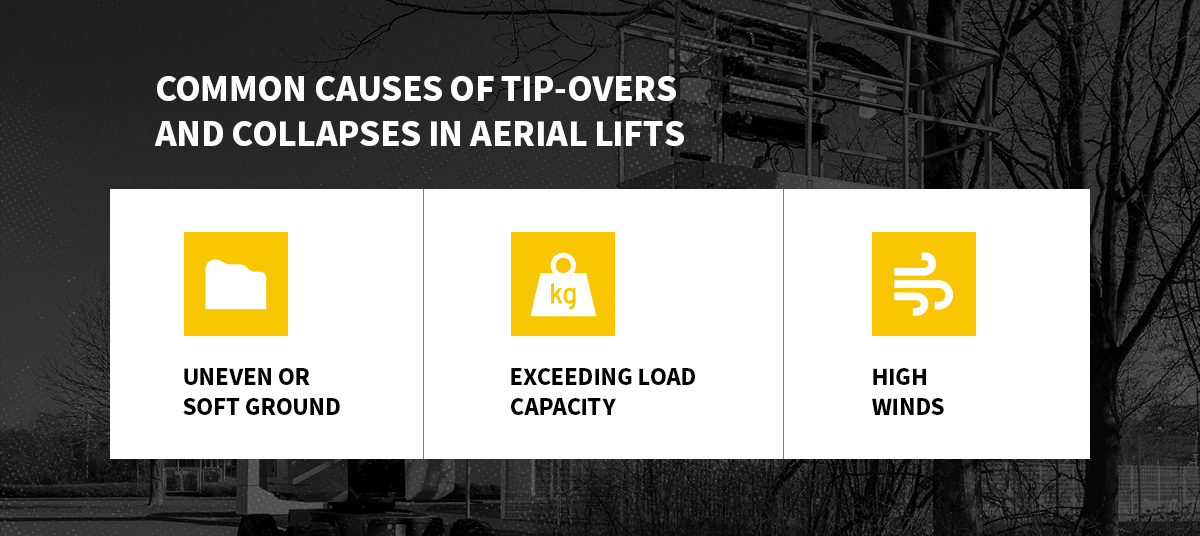
Aerial lifts can tip over and collapse for a few reasons, including:
- Uneven or soft ground: Check your lift’s gradeability or chassis angle limit when moving it. Some machines have inclinometers to alert you to excessive slope. While you may be able to drive stowed away on uneven ground, you can rarely operate a lift without the use of outriggers. Some aerial lifts are suited for warehousing on level surfaces, whereas others are equipped for construction and more rugged terrain.
- Exceeding load capacity: Every aerial lift has a safe working limit. Check the lift’s nameplate or your manufacturer’s instructions to stay within safe parameters. When considering your weight limit, include the operator, tools and any materials on the platform.
- High winds: OSHA states that you should not operate an aerial lift in winds above what your manufacturer specifies.
Falls From the Platform
When working from heights in aerial lifts, falls are a serious concern. Guardrails provide basic protection from falls and keep larger items from sliding off the platform. Workers must wear a full-body harness and a lanyard attached to a dedicated anchor point inside the basket. This personal fall arrest system helps protect workers from sudden jolts or tip-overs, preventing them from falling to the ground.
Electrocution From Power Lines
Even if you’re not working on the power lines, you must take them into account when working near them. Assume all overhead power lines and communication cables are energized and keep at least 10 feet away from them.
Struck-By and Caught-Between Incidents
Consider the risks of passing traffic or pedestrians around your working area. Use ground-level warnings like signage and cones or even consider barriers where appropriate. OSHA advises marking a danger zone around the aerial lift. Using a spotter helps the aerial lift operator navigate more safely. Spotters identify hazards and warn the public if they come too close.
You can manage caught-between incidents by ensuring your lift is designed to travel with workers on the platform. Do not stand between overhead hazards and the basket rails. This minimizes the risk of workers getting trapped and crushed between the rails and joists and beams.
Boom Lift and Scissor Lift Safety Tips
Basic safety rules apply to all aerial lifts, but scissor lifts and boom lifts create specific risks.
How to Safely Operate a Scissor Lift
OSHA classifies scissor lifts as mobile scaffolds rather than aerial devices, underscoring the importance of stability for their safe operation. Start on a firm, level surface before elevating the platform, as scissor lifts have a high center of gravity and tip easily.
Scissor lifts can be susceptible to high winds. Check your wind load, as the large platform can act like a sail and cause instability. Never drive the lift with the platform elevated unless your model is designed to do this and you’re on a smooth, obstruction-free surface.
How to Safely Operate a Boom Lift
One of the most important boom lift safety tips is to consider the counterweight’s large swing radius. Allow for a large hazard zone on the ground to mitigate crushing risks. As the boom extends horizontally, boom lifts can be vulnerable to tip-overs from overreaching. The center of gravity changes rapidly. Understand the load chart to see how much weight is safe at different angles.
Use a personal fall arrest system to protect against the catapult effect. A small bump can suddenly jerk the basket and increase the risk of ejection.
Aerial Lift Safety Training Requirements
Your aerial lift is only as safe as the person operating it. Ensuring your operators are fully trained and confident with the machine is crucial. OSHA states that only trained and authorized personnel should use an aerial lift.
Proper training isn’t just watching an aerial lift safety for beginners video. Your operators must understand how your specific lift model works, recognize hazards and demonstrate hands-on proficiency to a qualified person. That’s why professional operator training is essential for a truly safe, compliant jobsite.
Find OSHA-Approved Aerial Equipment Training
Operating an aerial lift safely requires a mix of regular inspections, hazard awareness and proper operator training. Safety and productivity go hand in hand, as the fewer accidents your facility or jobsite has, the more time you can focus on your project.
Choosing a reputable training provider matters. Thompson Machinery offers OSHA-approved training for rough terrain and electric aerial lifts. Since 1944, we’ve proudly served our community as the exclusive Cat® dealer for Middle Tennessee, West Tennessee and North Mississippi. Find out more about our training solutions today.