


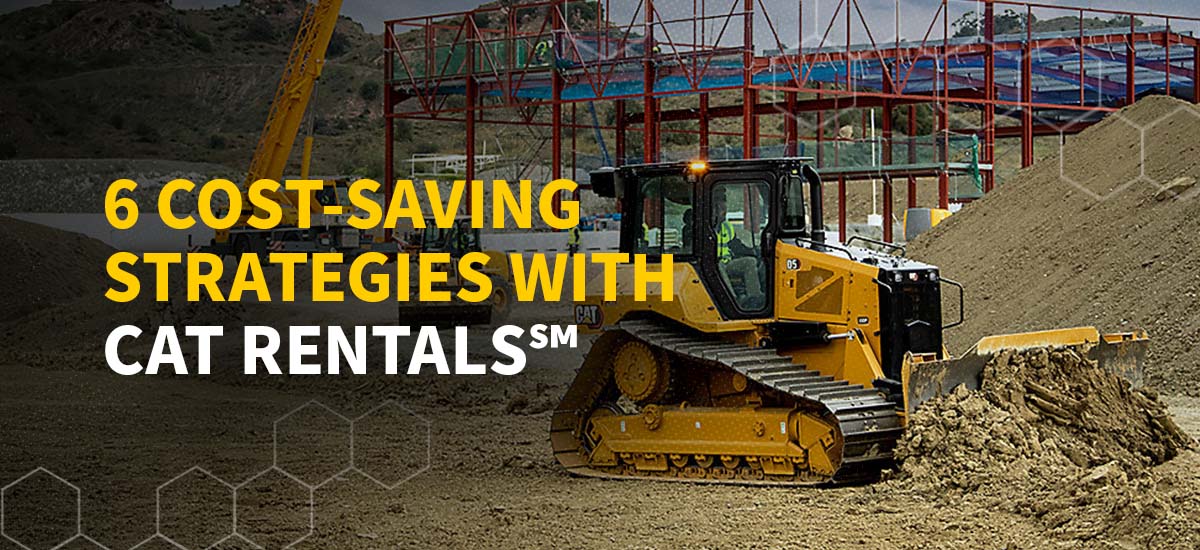
Owning a machine can tie up cash that could be working harder elsewhere. Cat Rentals changes that. Every dollar you keep out of assets stays available to cover payroll, fuel costs and your next bid.
Rentals let you size machines to your actual production needs. You pay just for active work time, scale your fleet up or down as needed, and move into new project types without betting capital on equipment you hope will stay busy. Here are six cost-saving strategies with Cat Rentals to help reduce your equipment expenses.
1. Choose the Right Size Cat® Equipment
Before getting a quote, assess the production math each task demands to match the right machine to the job. Various factors determine your target cycle time:
- Total volume or linear feet
- Required completion date
- Daily work hours
- Acceptable passes per day
For each machine on your plan, define the work in numbers. Your machine’s minimum constraints come down to the required:
- Dig depth.
- Trench width.
- Trench length.
- Backfill height
- Lift height.
- Load weight.
- Narrowest access point on-site.
Before confirming your rental, call or email the rental team with three specifics:
- Production target: Your target in yards per day, tons per day or linear feet.
- Site constraints: Access widths, overhead clearance and ground conditions.
- Schedule window: The dates and duration you need the equipment.
The rental team can compare against the real-world performance of Cat machines in similar site conditions and recommend the smallest class that meets your targets.
Confirm whether the final choice includes any available productivity technology options so operators spend less time setting up and more time moving material. Checking up-front can help you save money with Cat Rentals by choosing the right machine from the start. This diligent selection process helps minimize operational waste and enhance overall project profitability.
2. Partner With a One-Stop Shop
Before finalizing your rental plan, consider whether your rental partner offers a wider range of equipment for potential future needs. Choosing a partner that carries a vast selection of machinery, including aerial lifts, scissor lifts, compaction machines, power systems, masonry equipment and more, from various brands means you can cover most of your fleet needs through a single vendor.
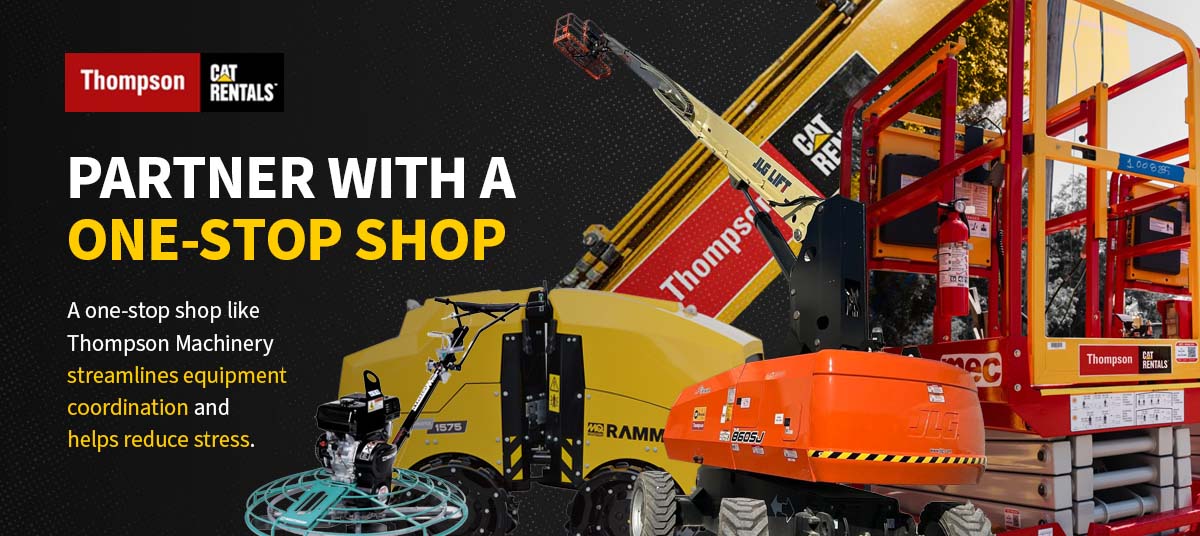
A one-stop shop like Thompson Machinery streamlines equipment coordination and helps reduce stress. Getting everything from one partner also means fewer delivery windows to coordinate and fewer invoices to reconcile.
3. Time Your Rentals to the Project Schedule
One of the easiest rental strategies is to break the project into phases and assign each machine to specific tasks. Schedule the rental to arrive just before its first assigned task and return right after its last task, so you avoid paying for machines that aren’t used. Proactive scheduling also allows you to reserve specialized equipment, ensuring availability when needed.
When phase scopes overlap, run the math on duration. Work beyond three or four days often qualifies for weekly or monthly rates, which lower the effective daily cost. Build realistic buffers into the timeline to allow for weather delays, inspection holds and unexpected rework.
Treat rental fees as planned operating costs in your job costing system. Rental payments often qualify as deductible business operating expenses in the year incurred. Coordinate with your accountant to time major rentals to support tax planning and cash flow.
4. Use Attachments to Multiply What Each Machine Can Do
Identify all distinct on-site tasks first, then determine how many tasks one base machine with the right attachments can handle. For example, for a compact track loader or skid steer, plan a tool chain where you might use:
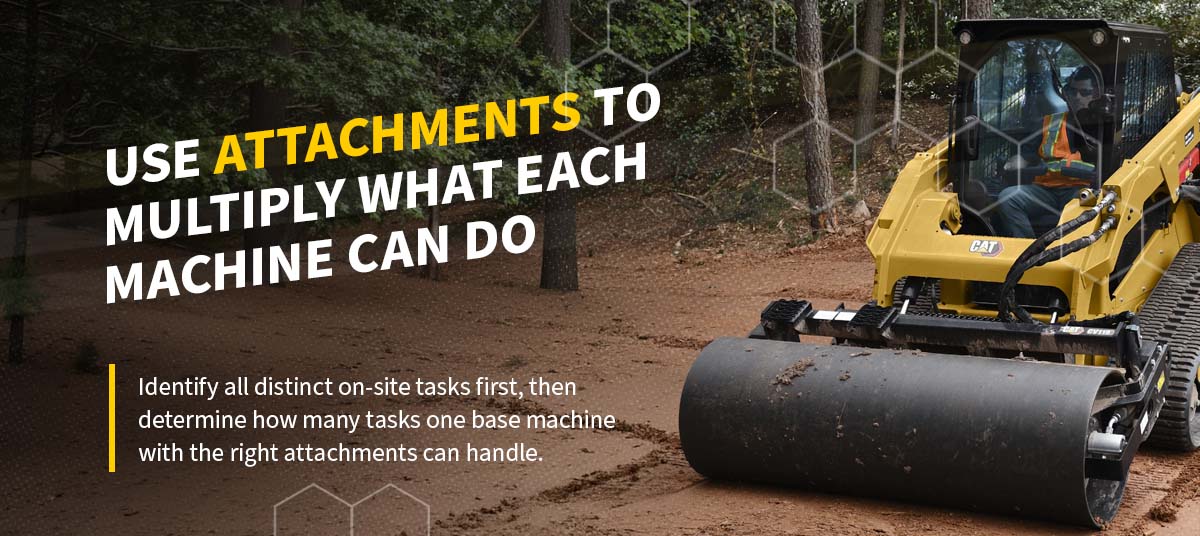
- Buckets for efficient loading and bulk material movement.
- Angle blades for both initial rough grading and precise fine grading tasks.
- Landscape rakes to effectively clear debris and prepare ground surfaces.
- Vibratory drum compactors or plate compactors to ensure proper compaction of soil and base layers.
When renting an excavator, you can match bucket types and sizes to trench width, soil type and desired sidewall finish, then add compaction attachments without bringing in a separate compactor.
When requesting a quote, ask the rental team to price the base machine plus all required attachments together and suggest any attachment combinations that could eliminate the need for a second machine.
This strategic approach enhances the versatility of each rented unit. By minimizing the number of machines on-site, you streamline logistics and can realize savings on transportation and rental fees.
5. Know What Your Rental Agreement Covers Before Work Begins
Before submitting your bid, request a sample or draft rental agreement and review four items line by line. The following are considered best practices for Cat equipment rentals:
- Standard maintenance and service: Confirm that Cat rental machines receive full inspections, fluid checks and scheduled service between rentals so you don’t need to budget shop labor, parts or diagnostic time.
- Repair responsibility: Clarify how routine wear-and-tear repairs during the rental period receive coverage versus damage from misuse or accidents. Build the deductible or potential customer responsibility into your risk allowance.
- Delivery, pickup and associated fees: Ask which fees apply to delivery and pickup and verify how overtime or extra hours are reflected in invoicing.
- Minimum term and early return policies: Ask about minimum term requirements for specific models or attachments and verify whether returning equipment early changes your rate structure or triggers additional fees.
Before work starts, share key agreement constraints, such as hour caps, return conditions and fuel policies, with your foremen. Understanding constraints will help ensure operators don’t exceed hours or return machines in a condition that incurs charges.
6. Leverage Cat Rentals Technology
Set up a centralized rental account so all rentals, invoices and agreements route through one profile. A single view simplifies tracking and makes it easier to spot overused and underused machines across your work. Use the account to compare planned versus actual rental days per project and identify recurring machine types you rent most often.
Give project managers and office staff who handle purchasing access so that the field and office see the same rental picture, reducing duplicate rentals and improving decision-making.
Register your Cat Rentals customer account to see all active and past rental in one place, including contract details, locations and basic machine details. Use the Cat Rentals app or online tools to check off-rent dates each week and cancel or extend machines ahead of time.
Pull your invoice history from the app when estimating new projects. Your equipment allowances reflect actual rates and usage patterns rather than generic allowances, tightening both bids and margins.
Get Started With Thompson Machinery
Smart rental planning protects your working capital and keeps more cash available for the parts of your business that drive growth. Thompson Machinery serves Middle Tennessee, West Tennessee and North Mississippi as the exclusive Cat dealer, connecting contractors to rental machines, attachments and the support that turns rental decisions into better margins.
Our rental team works from your production targets, site conditions and schedule to recommend machines that hit your numbers without paying for capacity you won’t use.
Centralize your rentals through our account tools to track usage, eliminate double orders and build tighter equipment allowances into future bids. Request a rental quote or contact us to share your common project types so our team can help you make smarter choices about renting equipment.