


Buying used equipment offers a real cost advantage, but the savings only matter if the machine has enough working life left to justify the purchase. Every buyer wants to know how long used equipment lasts, and the honest answer depends on too many variables for an exact number.
Two machines built in the same year can be in completely different conditions depending on how hard they’ve worked. A dozer with 3,000 hours on the meter has plenty of life ahead. One with 9,000 hours is approaching a different stage entirely, regardless of what the calendar says. This guide covers realistic lifespan ranges by machine type, along with the factors that push a specific unit toward the high or low end.
Average Lifespan of Common Used Heavy Equipment
How long used heavy equipment lasts depends heavily on machine type, application and design. The ranges below reflect typical service life under normal conditions with routine maintenance. Harsh conditions push a machine toward the low end, while lighter-duty use often extends it past the high end. Government sources often measure equipment life in years, but considering operating hours as well offers a clearer picture.
Excavadoras
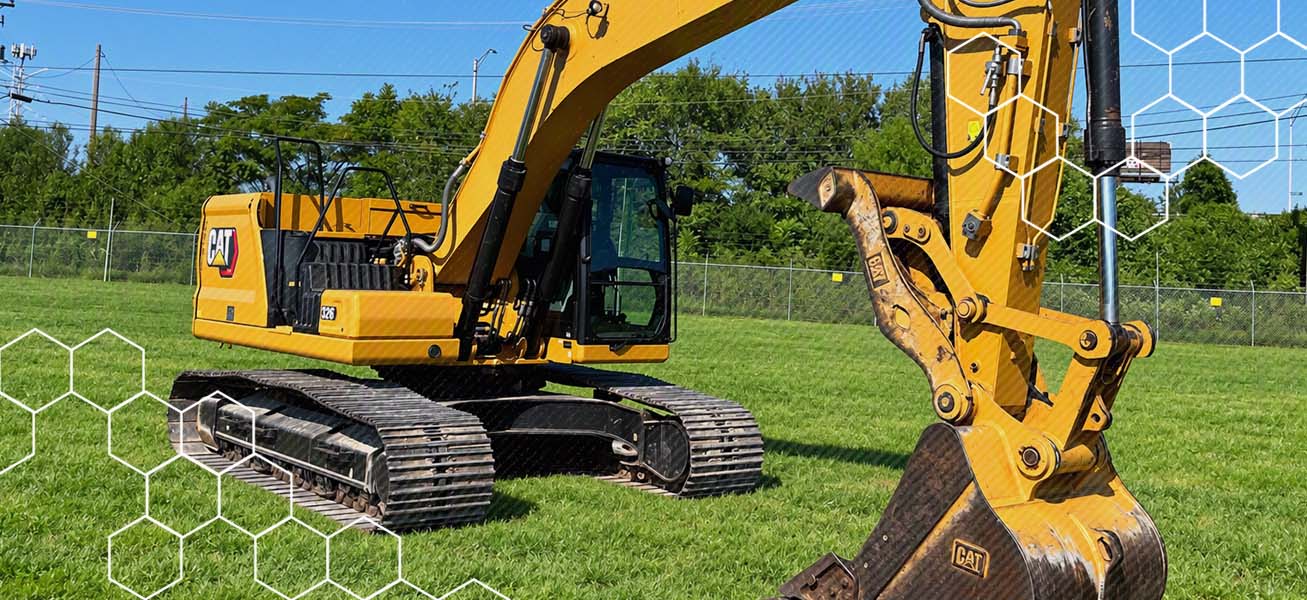
Hydraulic excavators generally reach 7,000 to 10,000 hours of primary production before replacement or a major overhaul becomes necessary. Undercarriage wear, hydraulic system demands and terrain intensity all shape where a specific unit lands in that range. The undercarriage typically accounts for 50% of a machine’s ownership and operating costs, making it a priority for inspection.
Most contractors retire excavators near the top of that range. By then, nearly every major component, aside from the engine, has typically been repaired or replaced. With a rebuild, some machines can continue into the neighborhood of 14,000 to 15,000 hours. Some state departments put a well-maintained excavator’s useful life at around 15 years. Buyers considering used excavators should ask for documentation of any major component work that has already been completed.
Bulldozers
Bulldozers generally see 7,000 to 10,000 hours of primary production. One example shows a D7R dozer operating past 11,300 hours before a full certified rebuild, proving that these machines can continue working beyond the typical primary production window with proper maintenance. The New York State Department of Transportation classifies bulldozers at the same 15-year useful life as excavators.
Track cleanliness, operating angles, pushing intensity and terrain roughness all influence the rate of wear and tear. The condition of the undercarriage also heavily determines the cost picture. A higher-hour dozer with a healthy undercarriage can be a stronger buy than a low-hour machine nearing undercarriage replacement. Buyers exploring used Cat® dozers should weigh the condition of the undercarriage alongside the hour count.
Cargadoras de ruedas
Wheel loaders tend to carry a longer economic lifespan than excavators or backhoe loaders. Buyers exploring used wheel loaders can generally expect 7,000 to 12,000 hours of service. Once a wheel loader goes through its first rebuild, operating costs level off, making extended production viable well past 12,000 hours. One waste-by-rail company featured in a wheel loader performance case study reported achieving 10,000 to 15,000 hours per machine with proper maintenance.
Retrocargadoras
Backhoe loaders generally have a shorter service life than larger machines, a trade-off many buyers accept for a more affordable, versatile unit. Industry sources broadly cite a working range of 6,000 to 8,000 hours before major repairs become likely, with estimates varying by application and maintenance history. The Pennsylvania Department of Transportation classifies backhoe loaders at a 10-year estimated service life, offering an approximate benchmark for a used unit’s remaining value.
Because backhoes often require major component work sooner than larger equipment, pre-purchase inspection matters even more here. Gaps in service documentation become a significant red flag at this stage of a machine’s life. Buyers shopping for used backhoe loaders should request service records early and ask the right questions before buying.
Significant Factors That Affect Used Equipment Longevity
The variables below determine the expected service life of the equipment.
Operating Hours and Calendar Age
Operating hours matter as much as age when considering the longevity of used equipment. A 7-year-old machine with 4,000 hours can be in far better condition than a 5-year-old machine with 9,000 hours, since wear increases more with use rather than time.
Active construction equipment may accumulate anywhere from 800 to 1,500 operating hours per year, meaning you can expect a 5-year-old machine to clock around 4,000 to 7,500 hours. Always request the hour meter reading and cross-reference it against service records. The American Society of Appraisers offers practical ways to estimate the normal useful life of various machines.
Maintenance History and Service Records
Maintenance records reveal more about a machine’s condition than the hour meter alone. The lifespan of equipment with a history of proper maintenance can extend well past typical expectations, which is why documentation matters. Good records include:
- Scheduled service logs
- Fluid analysis results
- Parts replacement history
- Technician credentials
Missing documentation is a significant red flag, since it leaves the machine’s remaining lifespan unknown, and pricing should reflect that uncertainty.
Work Conditions and Operating Environment
The same number of hours means very different things depending on the application. A loader used for light grading on a flat site experiences far less wear than one loading rock in a quarry. Operating conditions are one of the biggest cost drivers across a machine’s life.
Some factors that accelerate wear on the undercarriage, hydraulics and structural components beyond what the hour meter suggests include:
- Difficult terrain
- Weather exposure
- Corrosive environments
- Demanding applications like demolition or continuous-duty cycles
Equipment stored outdoors without protection is more prone to corrosion, seal degradation and electrical issues due to prolonged exposure to sun, rain and dust.
Quality of Prior Ownership
Who owned a machine and how they used it is also important. Single-owner equipment with consistent, dealer-maintained records is generally more reliable than multi-owner equipment with gaps in its history. Similarly, machines run by trained operators under strict maintenance routines are more likely to meet or exceed average component life.
Parts and Service Availability
Parts availability caps a machine’s practical lifespan. When replacement parts become scarce or expensive to source, the machine’s economic lifespan ends, even though it could theoretically keep running. This issue is especially common with obscure or discontinued models. Genuine parts and fluids ensure proper fit and factory-specified performance at every service interval.
Shop Cat® Certified Used Equipment at Thompson Machinery
Used equipment can be a smart financial choice when the buyer can trust what they are getting. That’s why it’s essential to consider the number of hours, maintenance history, operating conditions and prior ownership to determine how much life remains in a machine. Verifying these details separates a confident purchase from a costly guess.
Thompson Machinery’s Cat Certified Used program removes that guesswork. Each machine passes a 140-point inspection covering the engine, powertrain, hydraulics and undercarriage, backed by verified maintenance history and warranty coverage on key components. Browse the full selection of used Cat equipment to find a reliable machine.