

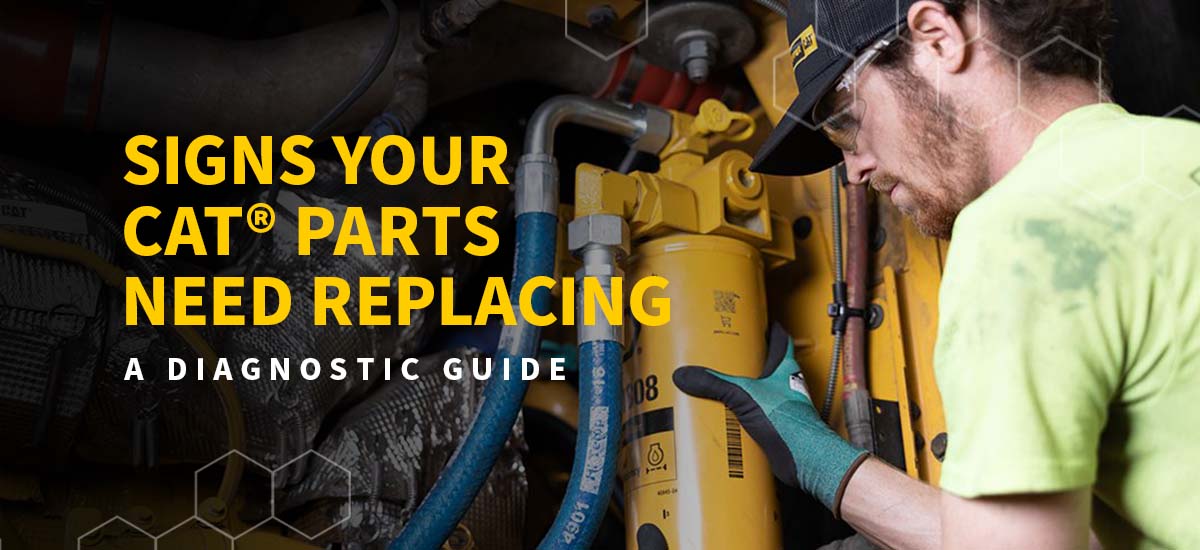
Imagine that a single hydraulic line fails on a Friday afternoon, causing your excavator to go down mid-job and forcing your crew to sit idle while your project timeline slowly slips off track. By Monday, what started as a $200 part has cost you thousands in lost productivity, emergency service calls and contract penalties.
This imaginary scenario illustrates the high real-world stakes for fleet managers and owner-operators — catch problems early, or pay the price later.
This guide gives you a diagnostic framework to spot the warning signs of part failure before they turn into catastrophic breakdowns. You’ll learn to identify the symptoms that matter and take action while a fix is still on your terms.
The 7 Early Warning Signs of Part Failure
Knowing how to recognize the signs that your Cat® parts need replacing starts with understanding the telltale symptoms of part degradation. These seven categories represent the warning signals your equipment sends before a serious failure happens. Spotting them is your first line of defense in proactive maintenance.
1. Decreased Performance and Efficiency
Diagnostic signs that equipment parts are failing often start with subtle performance changes:
- Slower cycle times, where operations that used to take 30 seconds now take 45.
- Reduced lifting capacity, as the machine struggles with loads it once handled easily.
- Increased fuel consumption, requiring more frequent fill-ups for the same workload.
- Engine laboring under normal loads with less power than you expect.
These symptoms can point to wear in hydraulic systems, worn injectors, clogged filters or degraded engine components. Catching them early helps you connect performance drops to specific parts before the problem grows. For more on what to watch for, check out this guide to machinery condition monitoring.
2. Abnormal Noises or Vibrations
New sounds mean something has changed mechanically. Experienced operators develop a feel for their machines. Investigate immediately if anything seems off.
- Grinding noises often point to worn bearings or gear damage.
- Squealing sounds typically indicate belt wear or bearing issues.
- Banging or knocking suggests loose components or internal damage.
- Unusual vibrations in the cab signal imbalanced or failing rotating parts.
3. Visible Wear or Damage
Make visual inspection part of your startup routine. Catching a crack early gives you time to schedule a repair on your terms. Daily walk-around inspections reveal problems before they cause failures. Keep an eye out for:
- Stress fractures in structural components or welds that will grow under load.
- Scoring on hydraulic cylinder rods suggests seal damage and contamination risk.
- Worn bucket teeth or cutting edges reduce digging efficiency and increase fuel use.
- Uneven tire or track wear pointing to alignment issues or undercarriage damage.
- Frayed hoses or cracked belts that will fail without warning.
4. Fluid Leaks or Contamination
Leaks are among the most obvious signs that you need to replace your Cat parts. Here are the points to check daily:
- Wet spots around hydraulic line connections and fittings could indicate seal failure.
- Fresh oil beneath the engine oil pan or valve covers signals gasket or seal problems.
- Puddles under the machine from the radiator or coolant hoses points to cooling system wear.
- Fluid on the ground beneath the transmission and final drive seals may indicate internal seal damage.
Beyond leaks, check the fluid condition. Cloudy or milky hydraulic fluid indicates water contamination. Dark, burned-smelling oil is breaking down and no longer protecting components.
5. Overheating Systems
Your machine is telling you something needs attention when your gauges run in the red. Overheating connects to several underlying issues:
- Low coolant levels from leaks or consumption
- Clogged radiator fins that restrict airflow
- A worn water pump failing to circulate coolant
- A failing thermostat stuck in the closed position
- Hydraulic systems working too hard due to internal wear
Address overheating right away. Continued operation leads to accelerated wear and serious engine or hydraulic system damage.
6. Unusual Smells
Your nose can detect problems before your eyes do. Shut everything down and investigate these warning signals before electrical fires or coolant loss cause major damage.
- Burning rubber indicates overheating belts, hoses or tires.
- An acrid electrical odor suggests that the insulation is melting or that an electrical component is failing.
- A sweet burning smell points to coolant leaking onto hot engine components.
7. Diagnostic Fault Codes
Modern Cat equipment includes onboard diagnostics that generate diagnostic trouble codes when systems operate outside normal parameters. These codes are the machine’s way of telling you what’s wrong.
Regularly check your display for active fault codes. Even if the machine appears to work normally, stored codes indicate developing problems that need attention. Review your owner’s manual for code definitions or hire a qualified technician who can interpret them and recommend what to do.
Proactive Tools for Diagnosis
Knowing when Cat parts need replacing means going beyond visual inspections. Professional fleet managers rely on diagnostic tools that catch problems before warning signs become obvious.
The Power of S•O•S Fluid Analysis
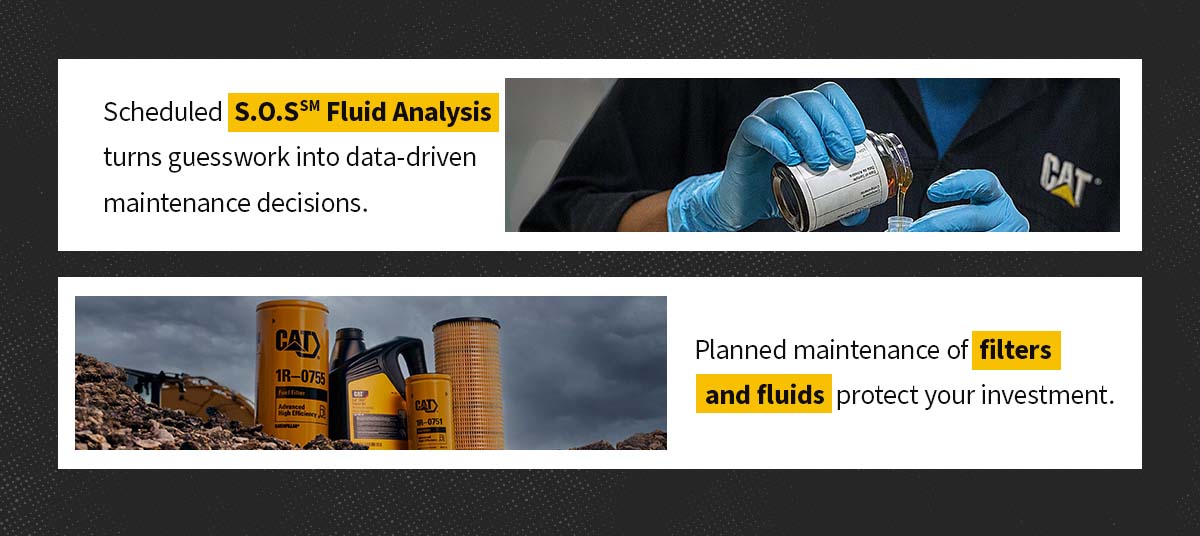
Think of fluid analysis as a blood test for your machine. Analyzing small samples of engine oil, hydraulic fluid and coolant in a lab reveals microscopic wear particles and chemical changes, letting you predict component failure long before performance drops or visible symptoms show up.
Regular fluid sampling catches:
- Metal contamination indicating bearing or gear wear
- Fuel dilution that breaks down oil protection
- Coolant intrusion that can cause catastrophic engine damage
- Additive depletion that reduces fluid effectiveness
Scheduled S.O.SSM Fluid Analysis turns guesswork into data-driven maintenance decisions, as you schedule repairs based on actual component condition.
The Importance of Regular Filter and Fluid Checks
Clean fluids and filters are essential for equipment longevity. Make filter inspection part of your routine maintenance:
- Cut open used oil filters to inspect for metal shavings.
- Check filter media for unusual debris or contamination.
- Replace filters at recommended intervals, not just when clogged.
- Source quality parts designed for your specific equipment.
Planned maintenance of filters and fluids protects your investment. A simple filter inspection reveals internal wear patterns — fine metal particles indicate normal wear, while larger chunks or excessive material mean accelerated degradation that needs immediate investigation.
Your Options After Diagnosis
After identifying a problem, you need to decide how best to address it based on your skills, timeline and the complexity of the repair or replacement.
Self-Service vs. Professional Repair
Experienced operators can handle straightforward repairs such as filter changes, hose replacements and basic component swaps. Self-service and repair options and the benefits of using genuine Cat parts give you control over timing and costs for these jobs.
More complex systems often need specialized diagnostic equipment, proprietary tools and technical expertise. Hydraulic system rebuilds, engine overhauls and electronic troubleshooting typically necessitate professional help. When the repair exceeds your capabilities or available time, comprehensive service and support options provide you with confidence in a job done well the first time.
The Repair or Replace Decision
Not every diagnosed problem calls for immediate parts replacement. Sometimes the better move is repairing the component — or even replacing the entire machine. Weigh:
- Machine age and total operating hours
- Cost of repair versus remaining useful life
- Availability of parts and repair expertise
- Impact of continued downtime on your operation
- Long-term reliability after repair
For a detailed framework on when to replace heavy equipment parts, use this guide to help you decide whether to rebuild or replace equipment. For machines worth saving, the Cat Certified Rebuild program returns equipment to like-new condition with warranty protection.
The True Cost of Downtime
The longer you wait on a diagnosed issue, the more it costs. Proactive maintenance scheduled during slow periods costs a fraction of an emergency breakdown during peak season.
Remember the potential consequences of unplanned downtime:
- Lost production and missed deadlines
- Emergency service premiums for after-hours calls
- Expedited parts shipping charges
- Idle crew wages while equipment is down
- Contract penalties for delays
When you catch problems early through diagnostic awareness, you control the repair timeline. An on-site field service can address urgent issues at your location, keeping your operation moving forward with minimal disruption.
Keep Your Fleet Running With Thompson Machinery
Proactive diagnosis is the difference between a scheduled repair and a costly breakdown. When you quickly spot the warning signs that your Cat parts need replacing or repairing, you can manage your timeline and budget.
Thompson Machinery is your partner in keeping your fleet operational. Whether you need genuine Cat parts for a DIY repair, on-site field service for an urgent fix or a complete Cat Certified Rebuild for aging equipment, we have the expertise and resources to support your operation across Alabama and northwest Florida.
Don’t wait for a breakdown to force your hand. Schedule service with Thompson Machinery today, or contact your nearest location to discuss your fleet’s needs.