


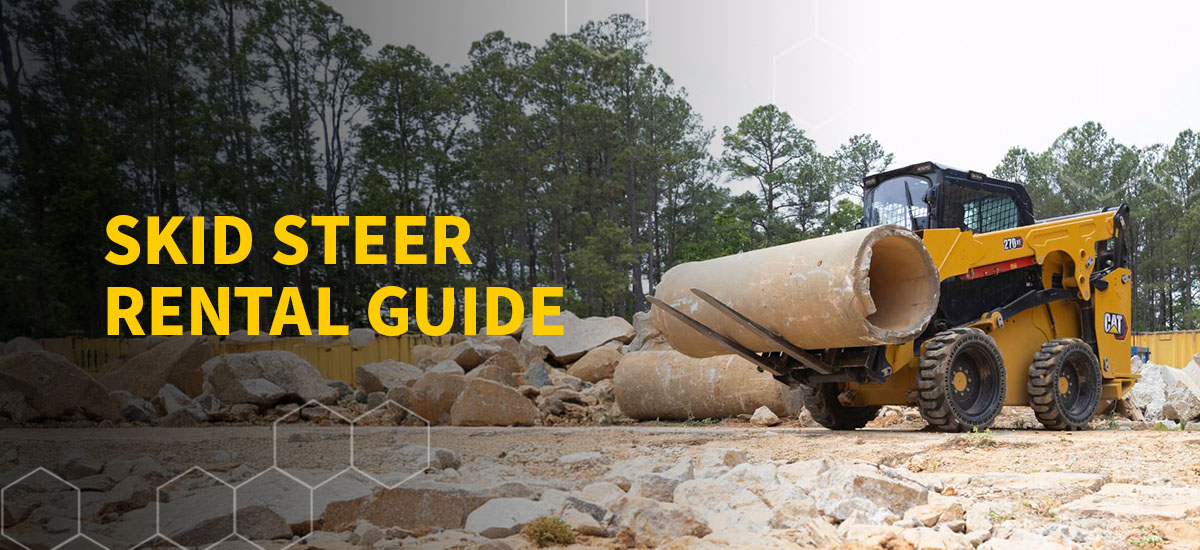
Skid steers are compact, maneuverable loaders with a quick-attach system that lets you swap between buckets, forks, augers and other implements for different task types. For construction, landscaping and agriculture professionals who need the machine for a specific job rather than ongoing use, renting is a practical, cost-effective choice.
Learning how to rent a skid steer starts with understanding which type best fits your site conditions, what size matches your load requirements and how to evaluate rental providers.
What Are Skid Steers Used For?
Skid steers are among the most versatile compact machines on a jobsite. They can operate in tight, confined spaces that larger machines can’t access, and a quick-attach coupler system means a single skid steer can handle multiple task types by swapping implements. Here’s where skid steers earn their keep across a few industries:
- Construction: Contractors use skid steers for site prep, grading, moving debris and demolition cleanup.
- Landscaping: Landscapers turn to them for grading surfaces, spreading material, digging and planting.
- Agriculture: Skid steers help farmers handle barn cleaning, feed handling and land clearing.
Skid Steer Types and Sizes
The right type and size of skid steer depends on your terrain, job scope and the load you’re moving.
Wheels vs. Tracks
Wheeled skid steers offer faster travel speed, better performance on hard-packed or paved surfaces, and easier transport between sites. They’re more maneuverable and work well when you need to cover ground quickly on firm terrain.
Compact track loaders (CTLs) distribute weight over a larger footprint, delivering better traction on mud, slopes and soft ground. The larger ground contact area reduces surface damage, making CTLs the right choice for jobs on finished grades, in wet conditions or on uneven terrain.
How to Choose the Right Size
Rated Operating Capacity (ROC) is the key spec to match against your job. Per industry standards from the Association of Equipment Manufacturers, ROC equals 50% of the machine’s static tipping load, which is the safe working capacity under normal operating conditions.
Identify the heaviest single material load your operator will move, then choose a machine whose ROC meets or exceeds that weight. Also factor in width for access points and overall operating weight for transport logistics.
Rental fleets typically range from around 1,550 pounds ROC on the compact end up to 2,700 pounds ROC on the larger end. If you’re unsure where your job falls, any knowledgeable rental provider should be able to help you right-size before you commit.
Archivos adjuntos
Attachments are what make a skid steer truly versatile. Common rental attachments include:
- General-purpose buckets
- Pallet forks
- Sinfines
- Pinzas
- Escobas
- Sweepers
- Labradores
- Mulchers
Know what attachments your job needs when you call and ask the provider what’s in their inventory. Confirm whether attachments are included in the rental rate or billed separately. Attachment availability varies by provider and location, so check in advance.
Skid Steer Rental Costs
Rental costs vary significantly and are set by individual providers depending on several factors:
- Machine size and ROC: Larger machines cost more due to higher capacity and capability.
- Wheeled versus tracked: CTLs typically rent at higher rates due to higher acquisition and maintenance costs.
- Rental duration: Longer rental terms lower the effective daily rate.
- Availability: Local inventory levels affect what’s available when you need it.
- Regional demand: Seasonal fluctuations and market conditions influence pricing.
- Delivery: Transportation costs vary based on distance and the provider’s service area.
- Add-ons: Attachments and damage protection are typically billed separately.
Contact a rental provider directly for a quote specific to your job, location and duration.
What to Consider When Renting a Skid Steer
Before you pick up the phone, here are essential skid steer rental tips to guide your decision:
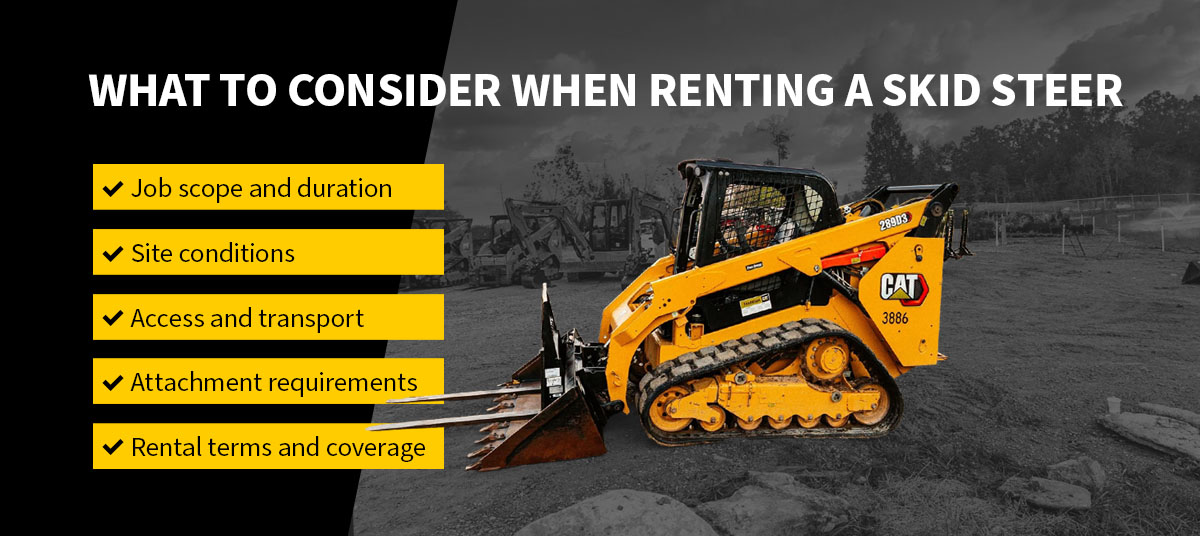
- Job scope and duration: Outline every task the equipment needs to perform, estimate your timeline and determine whether one unit covers the full project or if you’ll need multiple machines.
- Site conditions: Match machine type to your terrain. Hard-packed or paved surfaces favor wheeled models, while soft ground, slopes and wet conditions require tracked loaders.
- Access and transport: Verify the equipment can reach your work area and confirm whether you have haul capacity or need delivery service.
- Attachment requirements: Identify attachments based on your specific tasks, not just machine size, and confirm availability with the provider before signing.
- Rental terms and coverage: Review damage waiver options, insurance requirements and fuel policy up front. Understand what’s covered and what you’re responsible for if issues arise.
If your job scope extends beyond a skid steer, consider reviewing earthmoving equipment rental options to ensure you have the right fleet for the full project.
Best Practices for Skid Steer Rentals
Follow these best practices for skid steer rentals for a smooth experience:
- Operator qualifications: Regulations from the Occupational Safety and Health Administration require employers to ensure operators are qualified by training or experience before operating the machine. That means operators must demonstrate the knowledge and skill to run it safely. If your assigned operator isn’t familiar with the specific machine type, training must happen before the rental begins.
- Insurance: If your business carries a commercial general liability or equipment policy, check whether it covers short-term rentals before you sign. If not, many rental providers allow you to add coverage at the time of agreement. Either way, verify coverage status before the machine leaves the yard.
- Rental logistics: Duration options typically include daily, weekly and monthly terms. Choose based on your project timeline to maximize value. For pickup versus delivery, confirm availability, range and any associated costs up front — not all providers deliver to all areas. If your project runs long, ask whether extending the rental is possible before signing so you’re not stuck restarting the process mid-job.
- Review your agreement: Before signing, confirm equipment condition and service history. A quality provider will have records showing the machine has been inspected and maintained before each rental. Know who to contact if something goes wrong on-site — understand the process before you need it. Ask what protection options are available beyond base insurance. Loss damage waivers and limited damage waivers are common options that vary by provider.
Choose the Right Skid Steer Rental Provider
Evaluate providers against these criteria to ensure you’re working with a reliable partner:
- Fleet quality: Are the units low-hour and regularly serviced between rentals? Well-maintained equipment reduces the risk of downtime mid-project. Ask for service records or inquire about the provider’s inspection process.
- Expertise: Does the provider help you match the right machine and attachments to your job before you sign? A good rental partner walks through your application and right-sizes the solution — not just hands you the keys.
- Service support: What happens if something breaks down on-site? Providers with on-site service capability, parts availability and responsive support minimize disruption when the unexpected happens. Factory-trained technicians make a difference when it comes to reliable repairs.
- Location and availability: Are there locations close to your project area? Multiple nearby locations mean more machine availability, lower delivery costs and a shorter wait if you need a swap.
- Flexible terms: Can you rent daily, weekly or monthly and extend if your timeline shifts? Confirm this before signing.
Rent a Skid Steer With Thompson Machinery
When you rent from Thompson Machinery, you get the right equipment for your job, backed by the expertise and support to keep your project moving. We’ve served Middle Tennessee, West Tennessee and North Mississippi as the exclusive Cat® dealer since 1944. Our extensive inventory includes low-hour Cat skid steer loaders serviced by factory-trained technicians before and during your rental period.
Our team helps you identify the right machine size and attachments for your application, and we provide on-site maintenance support, parts delivery and training assistance throughout the rental to keep your projects moving forward. Browse Cat skid steer rentals at Thompson Machinery and request a quote today.