


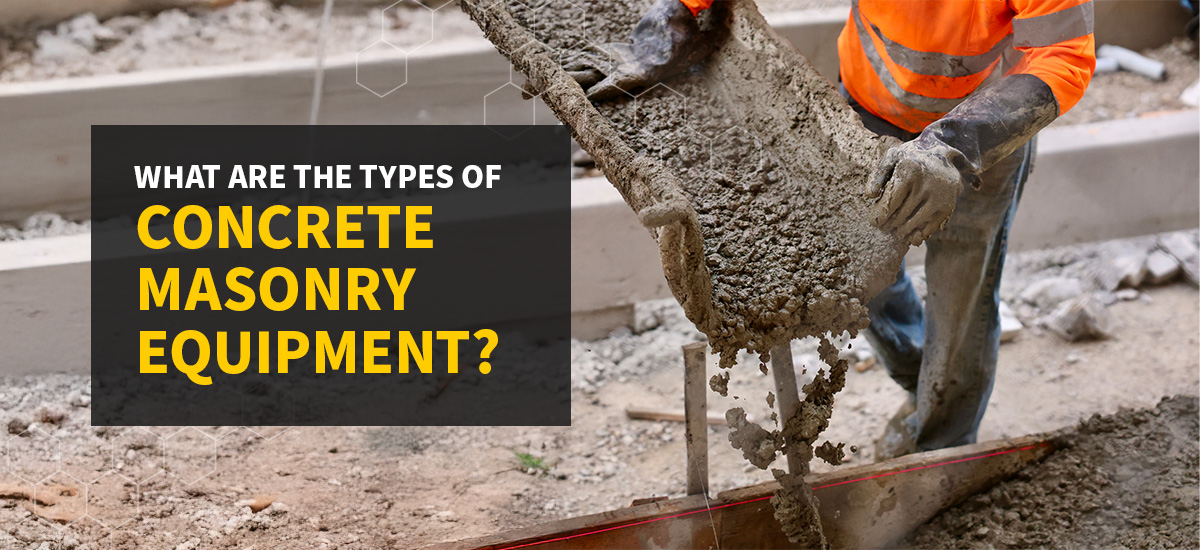
Successful concrete work starts with planning. From mixing to finishing, each phase of the job requires a unique set of tools. Missing even one crucial item can delay schedules, inflate costs, compromise quality and force rework. This article provides a list of essential concrete tools and equipment to help you identify what’s needed and when. Whether you’re prepping footings or smoothing a finished slab, the right tool at the right time makes all the difference.
1. Mixing and Transporting Equipment
Strong concrete begins with consistent mixing and steady movement from the batch area to the pour. Reliable equipment ensures materials blend evenly and that fresh concrete is delivered to the correct location on time.
Concrete Mixers
Concrete mixers combine cement, aggregates and water into a uniform batch. They eliminate inconsistencies that can weaken the finished product. Common concrete mixers include:
- Drum mixers: Drum mixers feature a rotating drum that continuously tumbles materials, ensuring a thorough mixing process. They’re versatile for small and medium-sized projects.
- Twin shaft mixers: Twin shaft mixers use counter-rotating shafts to blend materials quickly and thoroughly. The motion produces a homogeneous mix, ideal for precast and high-volume construction.
- Planetary mixers: Planetary models feature two mixing arms that rotate on their own axes while orbiting the center of the mixing drum, mimicking planetary motion. They’re particularly effective for precast, high-strength and specialized mixes.
Concrete Pumps
Pumps transfer freshly mixed concrete directly to placement zones, minimizing labor and improving speed. Two main pump categories support modern concrete work:
- Boom pumps: Boom pumps feature an articulated arm that delivers concrete to elevated or hard-to-reach locations, making them ideal for multistory or complex pours.
- Line pumps: These pumps rely on connected hoses to move concrete horizontally. They are often mounted on trucks or trailers for ground-level work and long horizontal runs. They’re suitable for pouring concrete on slabs, sidewalks or driveways.
Conveyor Systems
Concrete conveyors use a rotating belt or chain mechanism to move fresh concrete directly from the mixer to the pour area. They support a smooth, continuous flow and reduce the physical labor required to move concrete across distances.
Ready Mix Trucks
Also known as transit mixers, these vehicles carry premixed concrete from the batching facility to the jobsite. Their constantly rotating drums keep the mix from setting during transport. Ready mix trucks offer reliable batching and delivery, ensuring concrete is workable and ready to pour upon arrival.
2. Compaction Equipment
Once the concrete is placed, the next critical step is to compact it. Proper consolidation eliminates air voids, reduces the risk of cracks or surface defects and ensures complete contact between aggregates and reinforcement. Choosing the right compaction tools, therefore, is essential to protect the integrity of your entire structure.
Vibradores de hormigón
Concrete vibrators help consolidate wet concrete by releasing trapped air bubbles and settling the mix evenly around reinforcement. They help create a dense structure with uniform appearance and consistent load capacity. There are three main types of vibrators:
- Needle vibrators: These vibrators are inserted into the wet concrete to transmit high-frequency oscillations throughout the mix. They’re essential for thick slabs, columns and walls.
- External vibrators: External vibrators are attached to the outside of formwork to consolidate concrete in precast molds or architectural elements.
- Surface vibrators: These vibrators apply gentle vibration from the top, making them ideal for shallow concrete layers or finishing passes on slabs and floors.
Compactadores
Before pouring begins, compactors prepare the subbase — the layer beneath the slab that supports everything above it. A well-compacted base prevents uneven settling, cracking and premature surface failure.
- Plate compactors: These flat-bottomed machines are ideal for granular soils and small jobsites. Their rapid, repetitive vibration densifies the base material to create a stable layer ready for formwork.
- Rollers: Rollers cover larger areas quickly with uniform pressure. They are best used for prepping wide slabs or pavement bases.

3. Cutting, Drilling and Demolition Equipment
Once concrete has cured, it often requires modification, like cutting openings or removing existing slabs. The right tools make these adjustments safe and accurate. Concrete masonry equipment types include saws, drills and hammers engineered to handle the density and hardness of set concrete.
Sierras para hormigón
Concrete saws create clean control joints that help guide cracking and protect the slab’s appearance over time. They are also essential for trench work, expansion cuts and selective removal. They use diamond-tipped blades that slice through hardened material without compromising the surrounding surface. Common concrete saw categories include:
- Handheld saws: Handheld saws are ideal for small-scale or overhead cuts.
- Walk-behind saws: These are larger and more powerful than handheld models. They are perfect for deep cuts in pavement or floor slabs.
- Masonry saws: Designed for cutting stones, blocks or bricks, masonry saws deliver precise results for decorative or structural masonry work.
Concrete Core Drills
Concrete core drills cut perfectly round openings for routing plumbing lines, electrical conduit, ductwork and other infrastructure through walls or slabs. Their cutting action produces clean edges with minimal material disruption, which helps maintain the strength of the surrounding concrete.
Breakers and Hammers
Breakers and demolition hammers remove old sections of concrete. Their concentrated impact energy breaks down material efficiently, allowing crews to clear space for repairs or upgrades. These tools are an essential part of concrete masonry equipment types used throughout renovation and reconstruction work. Electric, pneumatic and hydraulic options exist for varying job sizes.
4. Surface Preparation and Finishing Equipment
After placement and consolidation, construction crews must level, smooth and texture the concrete to achieve its final appearance and durability. This stage refines the slab’s profile and prepares it for coatings or decorative finishes.
Power Screeds
Power screeds level freshly poured concrete by striking off excess material to the desired grade. Vibrating blades distribute the mix evenly, ensuring a consistent, dense surface that’s ready for floating and troweling. They save time compared to manual screeding, especially on large pours.
Floats and Trowels
Floats and trowels are among the most essential concrete masonry tools required for quality results.
- Floats: Floats prepare the surface before the concrete becomes firm. They level out imperfections and push down aggregate.
- Trowels: Trowels refine the slab later in the process, creating a dense, smooth finish.
There are different kinds of concrete trowels suited to job size and detail level:
- Walk-behind power trowels for midsized slabs
- Ride-on power trowels for large, open areas
- Hand trowels for edges, corners and touch-up work
Concrete Grinding and Polishing Machines
Grinding and polishing machines refine cured concrete surfaces by removing imperfections or uneven spots. Grinding prepares the surface for sealing or additional layers, while polishing enhances reflectivity and creates a clean, professional appearance. These machines use diamond abrasives in progressive stages to achieve the desired texture or sheen.
Choose Thompson Machinery for Concrete Masonry Equipment
Every phase of a concrete project relies on precision, from accurate mixing and compaction to cutting, drilling and finishing. Having the essential concrete masonry tools saves time and improves structural strength and surface quality. However, owning every piece of concrete equipment can tie up capital and increase maintenance responsibilities. Renting offers flexibility without long-term cost commitments, making it an ideal solution, especially when you need equipment for a single project.
At Thompson Machinery, we make the renting process straightforward. As the exclusive Cat® dealer for Middle Tennessee, West Tennessee and North Mississippi, we offer a well-maintained rental fleet, knowledgeable staff and eleven locations to serve you. Our concrete masonry equipment types include mixers, trowels, saws, compactors and more.
Browse our lineup of equipment rentals online or contact our team for a quote today. We’re ready to help you match the right tools to the task.
