


Renting equipment is a smart financial move for many projects, freeing up capital and giving you the right machine when you need it. However, a rental only pays off when you are well prepared to utilize the machine. Without a plan, that equipment can sit idle while you sort out logistics. An untrained operator can burn through billable hours while learning the controls. Fees you never saw coming can eat into your margin.
To get the best value from rental equipment, it’s essential to choose the right machine, train your operators, plan your schedule, understand the fine print and take care of the equipment while it’s on your site.
1. Pick the Right Equipment for the Job
Picking the right machine for the job is the most important decision in the rental process. The wrong size, type or capacity creates a cascade of problems, including lower productivity, longer rental duration and higher total cost.
Before you call the rental company, assess your project scope and task requirements. Confirm the specs match the job, including digging depth, lifting capacity and reach height, to prevent a mismatch that may slow progress later. Site conditions matter, too. For instance, wheeled machines perform well on flat, hard surfaces like concrete and asphalt, while tracked machines handle soft, uneven or muddy terrain with more stability.
Choose Attachments Wisely
The right attachment turns a single machine into a multitask workhorse, often eliminating the need to rent a second piece of equipment and optimizing machine performance across the site. To pick the right attachments:
- Match the attachment to the task: A hammer is ideal for demolition, while a smooth-edged bucket is suited for carrying loose material such as dirt and sand.
- Confirm hydraulic compatibility: The attachment needs to match the base machine’s hydraulic flow and pressure to operate at full capacity.
- Verify weight limits: The attachment’s weight should remain within the machine’s rated capacity to ensure stability.
There are numerous other attachments, including buckets with multiple edge types, augers, grapples, rippers and compactors. Quick couplers also boost rental equipment productivity by speeding up attachment changes. Let the rental team know up front which materials and tasks are involved so they can help you choose the right tool.
2. Train Operators Before the Rental Period Begins
Every hour an operator spends learning on the job is a paid rental hour producing zero results. Learning on the job often leads to reduced productivity, higher fuel consumption and a greater risk of equipment damage. Trained operators arrive familiar with the controls and get the machine working at full capacity from day one, maximizing rental equipment efficiency.
To prepare operators before delivery:
- Review materials ahead of time: Reading the operator’s manual and watching instructional videos before delivery builds familiarity before the meter starts.
- Pursue formal training: Many rental providers offer Cat®-certified operator training programs in online, instructor-led and simulator-based formats.
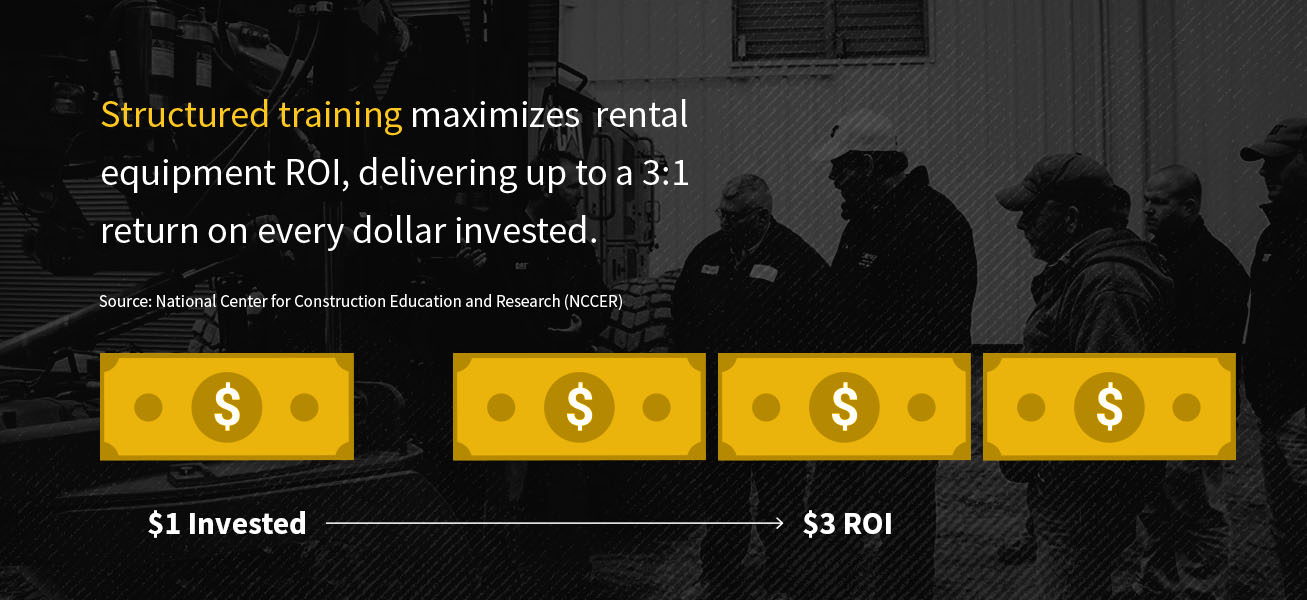
Structured training maximizes rental equipment ROI, delivering up to a 3:1 return on every dollar invested, according to the National Center for Construction Education and Research (NCCER). Training also improved productivity by 11%, decreased rework by 23% and reduced recordable injuries by 26%.
3. Plan Your Rental Timing and Budget
Smart scheduling separates a cost-effective rental from one that quietly drains the budget. Booking early confirms availability, and aligning the rental start date tightly with the actual project start ensures you’re not paying for unused time. For instance, if work begins on Wednesday, confirm delivery on Tuesday to avoid paying for rental time while the site sits idle. Also, remember to trigger the off-rent process as soon as a task wraps, since billing continues until the machine is returned.
Budget planning for rental equipment goes beyond the base rate. Factor in delivery fees, fuel requirements and potential extension costs. Also, keep in mind that daily, weekly and monthly rates differ, with longer windows often carrying better effective rates. The Cat Rentals℠ App offers a practical way to track rental periods and utilization in real time.
Keep an Eye on the Weather
Studies show that weather delays increase project durations by an average of 25.7% and raise costs by an average of 23.8%. However, with the right planning, weather becomes another variable to manage rather than a wild card that throws off your schedule and budget. Contractors who build weather awareness into their timeline keep projects moving. Be sure to:
- Check the forecast early: Reviewing conditions before finalizing the rental start date helps you avoid surprises once the machine is on-site.
- Build in buffer days: Adding one to two buffer days for weather-sensitive tasks like earthmoving, concrete work and aerial work gives your schedule room to flex.
- Know your limits: For instance, extreme heat or cold affects concrete curing, saturated ground limits earthmoving efficiency and high winds ground aerial lifts.
If a storm window shows up in the forecast, consider shifting the start date rather than paying for idle days.
4. Read the Rental Agreement and Watch for Hidden Fees
Reading the full rental agreement before signing, including the sections beyond the rate card, helps avoid surprises later. A few key elements are worth reviewing closely:
- Base rate structure: Confirm whether the quote reflects a daily, weekly or monthly rate, since each carries different terms.
- Delivery and pickup fees: Ask about charges for after-hours or weekend service.
- Fuel return policies: Returning the machine with the fuel level below the required amount typically triggers an additional charge.
- Cleaning requirements: Some agreements specify a cleaning standard that equipment must meet upon return.
- Damage waiver terms: Review what the waiver covers and what falls outside it.
- Extension penalty rates: Confirm the cost of extending the rental beyond the agreement.
- Minimum rental period clauses: Some agreements set a minimum charge regardless of how quickly the job finishes.
Billing typically begins at delivery rather than when work starts, and many agreements bill continuously regardless of weather or site access issues that prevent operation. Ask for an itemized quote before finalizing to maximize rental equipment ROI.
5. Take Care of the Equipment During the Rental
Responsible operation protects the project timeline and your liability exposure. It’s important to:
- Operate within rated capacity: Staying within the machine’s rated limits protects the equipment and people around it.
- Follow manufacturer guidelines: Each application has specific guidelines that keep the machine performing as intended.
- Document the equipment at pickup: A pre-operation walk-around with photos provides a clear record before work begins.
- Report issues right away: If something malfunctions or shows damage, contact the provider’s service and maintenance support team immediately, rather than fixing it on-site.
Contact Thompson Machinery to Get the Best Value From Rental Equipment
A rental delivers far more value when the groundwork happens before the machine arrives on-site. Contractors who plan for the right equipment, prepare their crew, read the fine print and stay ahead of schedule get more productive hours from every rental dollar.
Thompson Machinery is the exclusive Cat dealer for Middle Tennessee, West Tennessee and North Mississippi. With over 80 years of experience, we help match the right equipment and attachments to the job and offer OSHA-approved operator training programs. Our flexible terms and broad fleet of rental equipment help keep operations running.
Ready to get more out of your next rental? Browse our rental fleet or contact our team for a quote.