


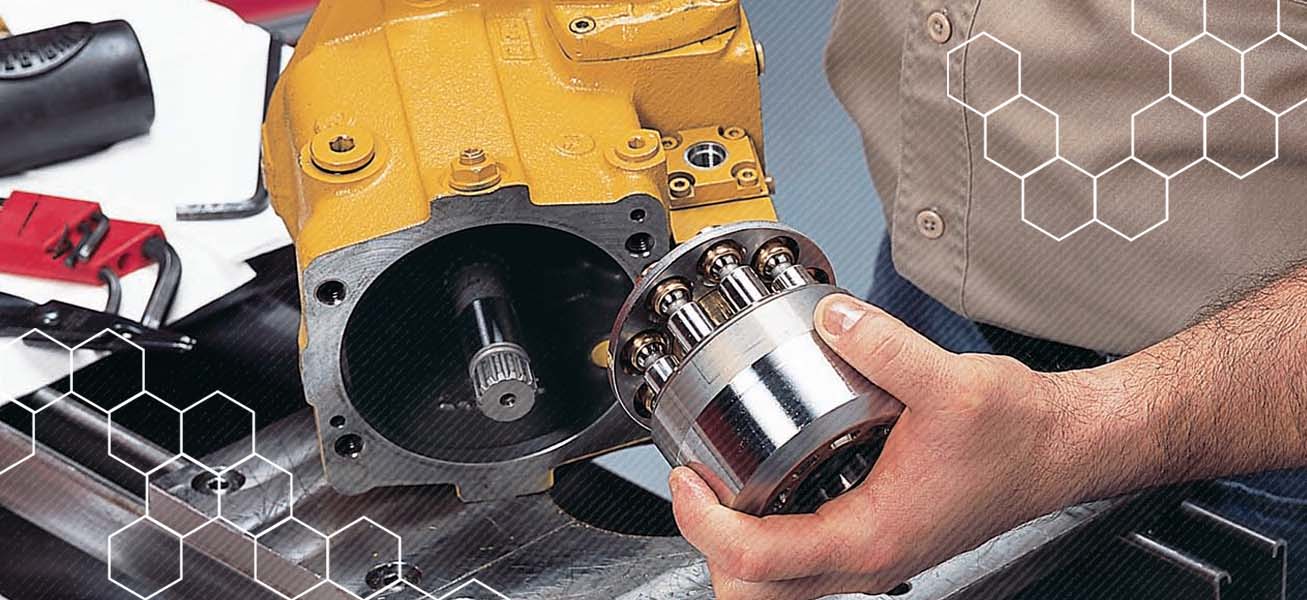
When a critical part of your equipment suddenly stops working, the repair bill is rarely the full cost. A breakdown mid-project means idle crews stand by, project timelines slip and costs cascade across every task scheduled behind the repair.
Stocking the right Cat® parts in advance keeps you in control of your timeline. Wear on these components often follows a predictable pattern, and a solid spare parts strategy lets you catch it before it turns into a shutdown. Here are some essential Cat parts every operator should have on hand.
1. Filters
Filters protect nearly every major system on a Cat machine. They get replaced more often than any other component, making them some of the most must-have Cat parts a fleet can keep in stock.
Engine Oil Filters
Engine oil filters trap soot, metal fragments and other contaminants that build up during normal operation. When one goes unserviced, those contaminants continue to circulate through the engine, leading to accelerated wear and eventual failure. Oil filters are among the most frequently replaced filters on any Cat machine, so keeping several in stock avoids delays at service time. Most Cat equipment requires engine oil filter changes every 500 service hours.
Air Filters
Air filters keep airborne debris and dust out of the engine, a critical job on dusty jobsites. They should typically be replaced every 500 service hours. However, equipment operating in heavy-dust environments often needs more frequent inspection and replacement than the standard interval suggests. Leaving a clogged filter in place past its service date speeds up engine wear, so having a replacement ready is essential.
Fuel Filters and Water Separators
Fuel systems are highly sensitive. Even microscopic particles or water contamination can damage injectors and pumps. Stocking fuel filters and water separators keeps that protection available the moment it’s needed. Fuel filters typically share the same 500-hour service window as oil and air filters. Cat Planned Maintenance Kits bundle oil filters, fuel filters and water separators together, making it simpler to keep all three on hand.
2. Seals and O-Rings
Seals and O-rings are small and inexpensive, yet a single failure can carry significant consequences. A failed seal allows fluid to leak, which can damage hydraulic systems, contaminate engine oil and take a machine out of service far longer than the seal itself costs. This makes seals and O-rings among the most important spare Cat parts to have on hand.
Seals fail due to normal wear over time or improper installation. Installing a seal incorrectly, such as pinching an O-ring or skipping inspection of the grooves and seating surfaces, can cause a recurring leak. Because replacement seals are affordable and compact to store, keeping a supply of common sizes on hand is one of the highest-return stocking decisions a fleet can make. Cat Planned Maintenance Kits also include the seals and O-rings needed for scheduled service intervals.
3. Engine Parts
Beyond filters and seals, belts and spark plugs are among the key components for Cat equipment that wear on a predictable schedule, making them straightforward parts to keep in stock.
Belts
Belts, especially the serpentine belt, are low-cost parts whose failure creates immediate and severe consequences. A snapped serpentine belt cuts power steering, air conditioning and battery charging all at once since the alternator stops charging, and it can lead to engine overheating if the belt also drives the water pump. A snapped fan belt can cause rapid overheating on its own, and a failed alternator belt disrupts electrical systems and starting.
Engine components like these often fail on a schedule. For instance, Caterpillar recommends inspecting the serpentine belt at the 1,000-hour mark and scheduling belt replacement at the 1,500-hour C-interval. Cross-reference the Operation and Maintenance Manual to confirm the exact interval for each model.
Spark Plugs
Spark plugs wear at a predictable rate tied to operating hours. A misfiring or failed plug degrades engine performance, fuel efficiency and starting reliability. Replacement intervals vary by machine, so consult your Operation and Maintenance Manual for the right schedule. Keeping spare spark plugs on hand allows for immediate replacement instead of waiting for a parts order.
4. Undercarriage Parts
The undercarriage carries the full weight and workload of your machine every shift, making it one of the most wear-prone systems on any Cat equipment. That wear is incremental and visible, so proactive inspection and a ready supply of replacement components can prevent sudden failure that takes a machine offline. These essential Cat parts deserve regular attention:
- Rollers: Rollers support and guide the tracks along the frame and distribute weight evenly across the undercarriage. Daily operation wears them down significantly, so they should be inspected regularly.
- Idlers: Idlers maintain proper track tension and prevent misalignment. Like rollers, they see significant wear from daily use and need regular inspection.
- Track chains and sprockets: Track chains provide traction and absorb ground impact, while sprockets engage the tracks and transfer engine power into movement. Sprocket tooth wear accelerates track wear if left unchecked, so inspect both together.
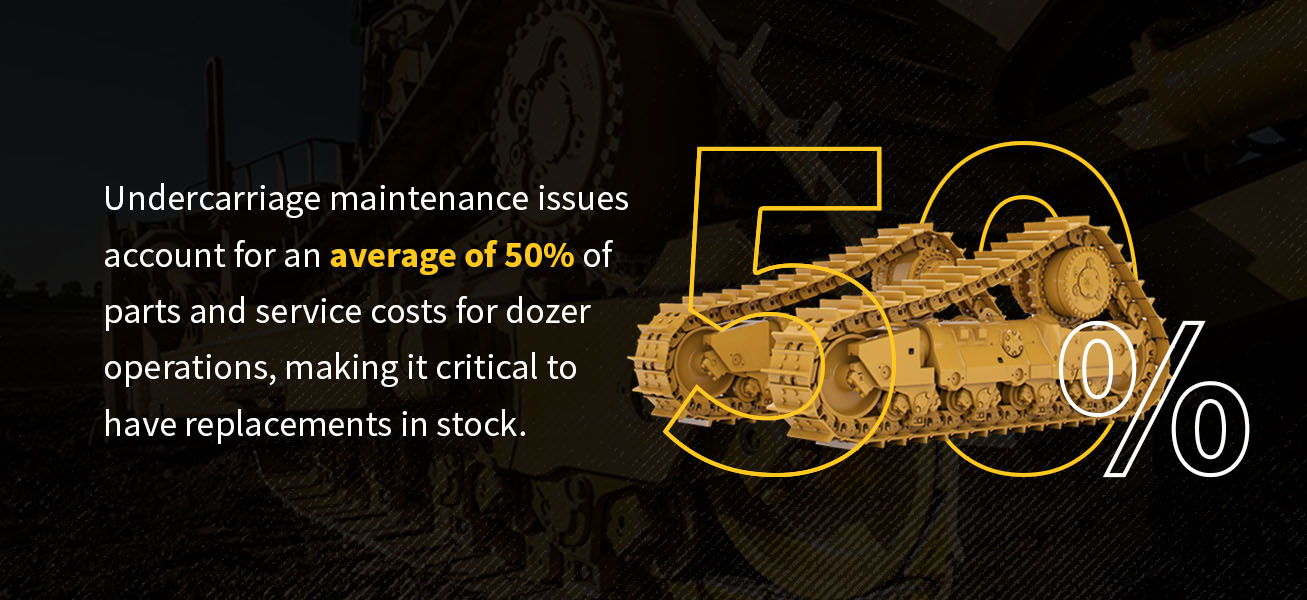
Undercarriage maintenance issues account for an average of 50% of parts and service costs for dozer operations, making it critical to have replacements in stock.
5. Hydraulic Components
Hydraulic systems power the most demanding functions on Cat equipment, including booms, buckets, cylinders and steering, and they depend on clean fluid and intact components to maintain pressure and performance. Hydraulic filters, hydraulic seals and hoses are worth keeping in stock since they are crucial components for Cat equipment.
Hydraulic filters have a longer replacement interval than engine oil filters, with many requiring replacement after 750 or 1,000 hours of operation, depending on the machine.
How to Build a Strategic Spare Parts Inventory That Reduces Downtime
Many operations react to breakdowns instead of preventing them. A strategic inventory built around the most essential spare Cat parts converts reactive maintenance into planned, controlled service. A few practical steps make this approach easier to put into action:
- Organize by model and serial number: Sorting your spare parts inventory by machine model and serial number makes the right part easy to find when you need it.
- Audit on a service-hour schedule: Regular audits confirm that stock gets replenished before a scheduled service arrives.
- Use Cat Planned Maintenance Kits: Cat Planned Maintenance Kits simplify the process by bundling all the filters and seals a scheduled service needs into one ready-to-use package.
Emergency or unplanned repairs typically cost more than the same work performed on a planned schedule, which is exactly what a well-managed inventory helps you avoid.
Get Genuine Cat Parts From Thompson Machinery
Keeping filters, seals, belts and undercarriage components stocked ahead of schedule turns wear and tear into planned maintenance instead of unplanned downtime.
Thompson Machinery is the exclusive Cat dealer for Middle Tennessee, West Tennessee and North Mississippi, giving fleets in the region direct access to genuine Cat parts built for their exact equipment. With more than 1.4 million new and used Cat components available, you can order anytime and get support from parts specialists around the clock.
Cat Planned Maintenance Kits bundle exactly what each service interval requires into one order. Shop Cat parts online or visit a location near you for more information about the top Cat parts to own for your operation.