



If you are interested in any of these in-person, instructor-led trainings or would like additional information,
please fill out the form at the bottom of this page.
CAT SERVICE INFORMATION SYSTEM 2.0 “SIS 2.0”
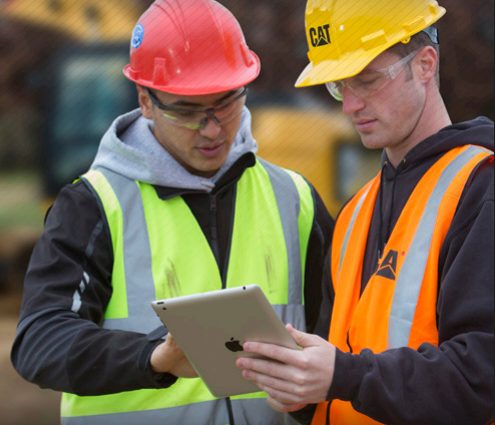
This course is designed to familiarize participants with the navigational features of SIS 2.0. Depending on customer access, participants will be instructed on techniques for how to navigate CAT SIS 2.0 efficiently and effectively.
Equipment and Safety » Students are required to bring their own laptop with active CWS (Corporate Web Security) sign on to CAT. (Laptops can be provided upon request).
Course Objectives »
Utilize the following features (if available):
- Utilizing Navigate and Search Features
- Parts Search
- Disassemble and Assemble
- Operation and Maintenance
- Schematics
- Specifications
- System Operations
- Testing and Adjusting
- Torque Specifications
CAT ET
This class will introduce service personnel to the basic operations and menus of CAT’s electronic technician service tool software (CAT ET). Students will learn about the machine interface, how to access information, save data to reports, and use diagnostic capabilities for troubleshooting. Participants will also learn how to update both the ET program and the communications adapter.
Prerequisites » SIS 2.0
 Equipment and Safety » Students are required to bring their own laptop with ET installed. (Laptops can be provided upon request).
Course Objectives »
Upon completion of this course, students will be able to:
- Modify their personal preferences
- Create and save reports
- Run Data Logs
- Change configuration settings
- Save ECM Replacement Files
- Locate Machine Software
- View Diagnostic codes and link information to SIS 2.0 for instructions on the troubleshooting process
AC FUNDAMENTALS
This class will cover analyzing HVAC systems used on Cat equipment and cover the Principles and Operation of an Air Conditioning System. Course instruction will include: the safety procedures associated with handling refrigerants, learning how to use the tools to conduct service procedures, and performing hands on procedures using an AC training aid.
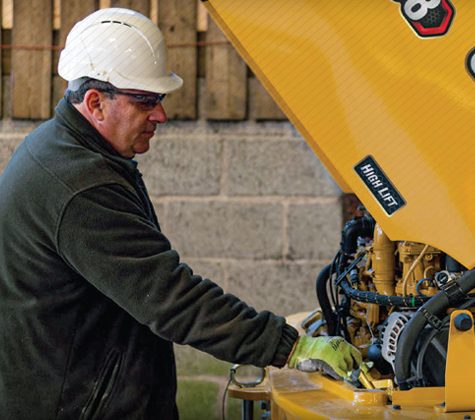 Equipment and Safety » Students are required to bring safety glasses, steel toe shoes, cut resistant gloves and must follow all safety procedures as directed by the instructor.
Course Objectives »
Upon completion of this course, students will be able to:
- Effectively analyze an HVAC system for Caterpillar equipment
- Explain the principles and operation of an air conditioning system
- Explain the safety procedures associated with handling refrigerants
- Utilize the tooling needed to conduct service procedures on an AC system
- Performing hands on procedures using an AC training aid
ELECTRICAL FUNDAMENTALS
This class covers electrical theory, voltage, resistance, current, and the relationship between the 3 (Ohms Law). Course instruction will include: the use and functions of a DMM (Digital Multi Meter), basic components of an electrical circuit, the various types of circuits (Series/Parallel), the several types of connectors, and voltage drop.
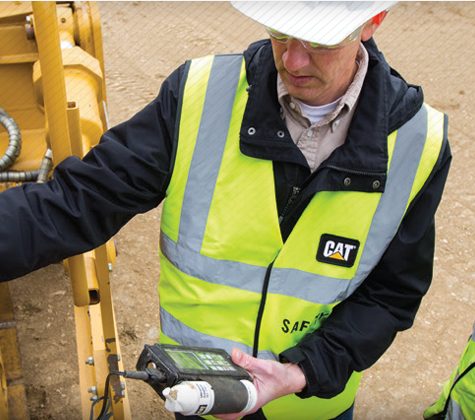 Equipment and Safety » Students are required to provide their own digital multi-meter and must follow all safety procedures as directed by the instructor. All instruction and labs (hands-on) will be classroom based.
Course Objectives »
Upon completion of this course, students will be able to:
- Understand and explain Ohm’s law and the effects resistance and current flow have in machine circuits
- Explain and demonstrate the proper use of a DMM, its functions, and how to use it for circuit measurements
- Explain voltage drop and demonstrate how to use it as a troubleshooting method
HYDRAULIC FUNDAMENTALS
This class covers hydraulic theory (Pascal’s Law). Course instruction will include: the basic components of a hydraulic system, various types of circuits both series and parallel, various ways of routing hydraulic power, different pump/motor types and their assembly and functions, basic hydraulic pressure control valves, and flow control valves.
 Equipment and Safety » Students are required to bring their own laptop. Proper PPE for shop-based labs will be required. (Laptops can be provided upon request).
Course Objectives »
Upon completion of this course, students will be able to:
- Understand and explain Pascal’s Law and how it correlates to machine hydraulic circuits.
- Explain and demonstrate the function of various hydraulic pumps and their assembly/disassembly.
- Understand the various safety procedures for testing and adjusting as well as how to properly deenergize a machine for troubleshooting and procedures.
ELECTRICAL AND HYDRAULIC SCHEMATICS
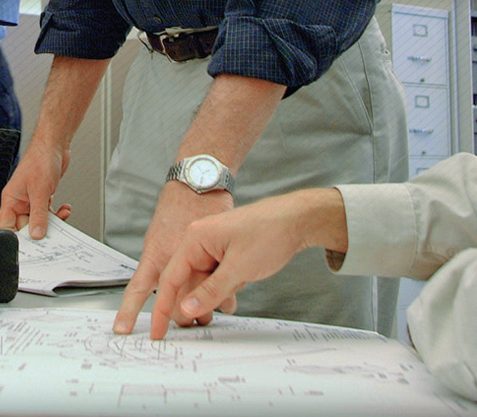
This class is designed to give students an in-depth understanding of schematics, ISO Symbols, and descriptive information listed within schematics. Students will learn techniques using schematics to help their efficiency when working with electrical and hydraulic systems.
Equipment and Safety » Students are required to bring their own laptop with active CWS sign on to CAT. (Laptops can be provided upon request).
Course Objectives »
Upon completion of this course, students will be able to:
- Explain and demonstrate schematic navigation, symbols, and information
- Demonstrate how to use schematics techniques to expedite finding the root cause of a fault
TIER 4 EMISSIONS
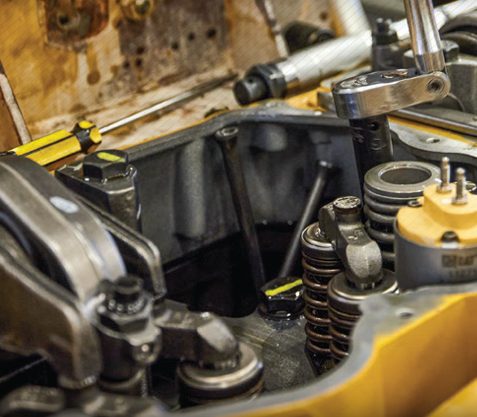
This class covers T4 Interim and T4 Final systems overview, regeneration strategies, operator interface, and the differences between emission systems. Course instruction will include: the location and function of system components, the composition, safety concerns, storage, testing of diesel exhaust fluid, and understanding the function of the warning systems and different inducement strategies
Equipment and Safety » Students are required to bring safety glasses, steel toe shoes, cut resistant gloves and must follow all safety procedures as directed by the instructor.
Course Objectives »
Upon completion of this course, students will be able to:
- Explain T4 Interim and T4 Final regeneration strategies and operator interface
- Be able to understand the differences between the emission systems
- Know the location and function of all the different system components
- Understand the composition, safety concerns, storage, and testing of diesel exhaust fluid
- Understand the function of the warning systems and
- Identify inducement strategies
BASIC SERVICE TASKS
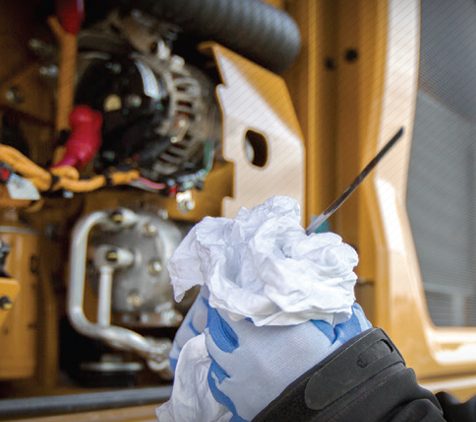
This course is designed to instruct technicians on performing basic service tasks. Instruction will cover applications used in daily job duties to develop a better working knowledge of safety and procedures used in the heavy equipment industry.
Equipment and Safety » Students are required to bring safety glasses, steel toe shoes, cut resistant gloves, and must follow all safety procedures as directed by the instructor.
Course Objectives »
Upon completion of this course, students will be able to:
- Understand and explain the proper installation of DuoCone seals, gaskets, seals, and bearings.
- Explain and demonstrate proper filter installation for preventative maintenance practices.
- Demonstrate how to find and use proper torquing procedures.
- Identify different lifting techniques along with their benefits and use along with demonstration on how to find the weight to components before lifting.
- Identify and explain proper housekeeping and contamination control practices
Tech Training Request Form