


Standby power often sits quietly until teams need it in a critical moment. Yet, those long periods of inactivity can put a generator at the highest risk of failure. Problems like wet stacking and moisture accumulation tend to develop when units spend too much time idle. These hidden issues can cause catastrophic breakdowns and costly downtime when your team needs standby power the most.
That’s where electrical load testing comes in. This test is the only reliable way to ensure your generator will actually perform during a real-world power outage. A load test simulates pressures and demands to verify a generator’s capacity, giving peace of mind that it will be ready when it counts.
Learn more about identifying engine failure, detecting hidden problems and mastering load bank testing so you can prepare your team for any event.
What Is Electrical Load Testing?
A professional load bank test goes further than turning the unit on. This test applies resistive and reactive electrical load to simulate what the generator will face during a full-scale outage, such as powering HVAC systems, lighting, heaters and computers simultaneously.
Simple start-ups without a load do not stress the engine. In fact, running diesel generators at light or no load can actually hurt the unit. In some cases, this process can promote wet stacking — a buildup of unburned fuel in the exhaust that can clog injectors, increase emissions and cause premature engine wear.
How Does Load Testing Work?
A load bank is a large piece of equipment that connects to your generator’s terminals or distribution panel, typically while the facility remains on utility power. The load bank consumes power the way building equipment would, but without interrupting your normal business operations. It draws electricity in controlled steps, allowing technicians to monitor performance in real time across the whole operating range.
Routine load testing serves several vital functions:
- Seat the piston rings: Higher temperatures during loaded operation help seal the cylinder walls.
- Evaporate moisture: Running at load boils off water in crankcase oil, preventing sludge.
- Verify the cooling system: Stress testing reveals problems with water pumps, radiators and thermostats that only occur at higher temperatures.
Critical Generator Load Test Requirements
Understanding the testing requirements for emergency generators is essential for compliance and operational reliability. The right approach minimizes risk, meets regulatory demands and ensures uninterrupted backup power during a crisis.
Regulatory Standards: NFPA 110
The National Fire Protection Association (NFPA) is a global entity that creates codes and standards to prevent injury, death and economic loss from electrical, fire and related hazards. NFPA 110 is the industry gold standard for emergency and standby power system maintenance. All critical systems, whether in healthcare facilities, public safety or mission-critical operations, must follow the strict requirements for load testing frequency and methodology.
Under NFPA 110, generators must undergo testing each month to verify performance. A key mandate is loading diesel units to at least 30% of their nameplate rating for at least 30 minutes. Running below this threshold accelerates wet stacking and can void warranties. If your actual facility load isn’t high enough, you must use a load bank.
Resistive vs. Reactive Loads
In the context of load testing, a resistive load is one that converts electrical energy into heat. Testing with strictly resistive load banks puts a straightforward demand on the generator and its alternator. However, many real-world demands, such as those from motors, pumps or transformers, are not so simple. These types of loads are known as reactive because they introduce a time delay between current and voltage, putting extra stress on a generator’s voltage regulation and alternator systems.
This distinction is crucial because what you simulate during a load test should closely mirror the conditions under which your generator will actually operate in an emergency. If a test accounts only for resistive loads, it may fail to expose issues that could arise when the generator must support systems that tend to cause electrical instability. For this reason, effective load testing protocols often include both resistive and reactive test components, either in combination or individually.
Environmental Factors
Local conditions matter when testing. High altitude and extreme temperature, common across Tennessee and Mississippi, can reduce a generator’s capacity. Teams should consider these variables to ensure accurate results and safe operation when testing.
How Often to Test Load Generator Systems
Regular generator testing ensures reliability when it matters most. Knowing the right inspection and testing interval is key to preventing failures and keeping essential systems powered during unexpected outages:
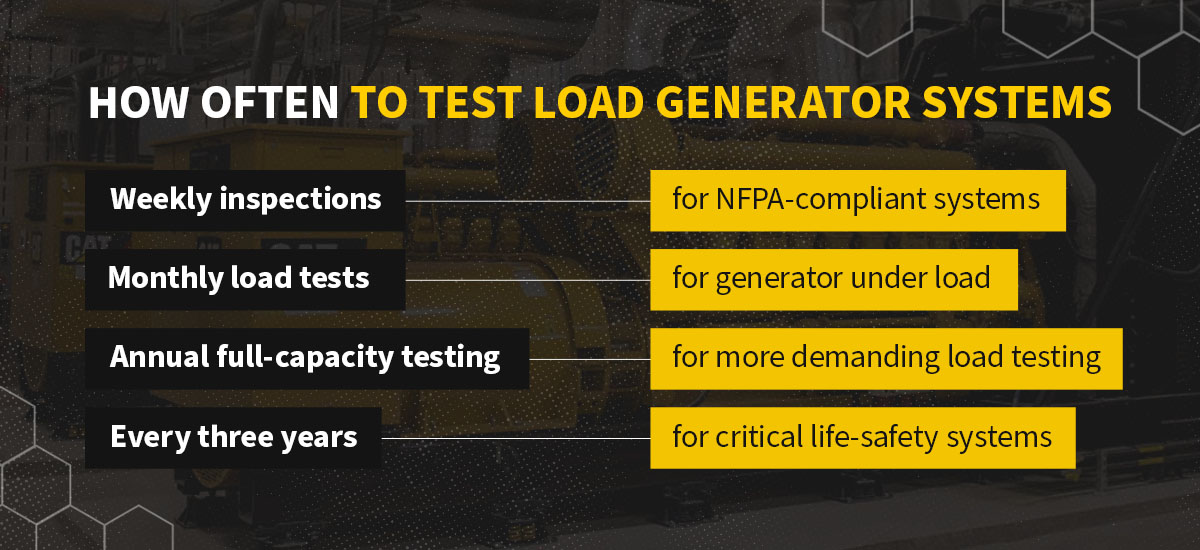
- Weekly inspections: NFPA-compliant systems require weekly visual inspections and no-load run exercises to check for leaks, low fluids and general readiness.
- Monthly load tests: Every month, teams should run the generator under load. The standard is the 30% rule to actively burn away wet stacking and uncover operational issues.
- Annual full-capacity testing: Once a year, teams must conduct more demanding load testing. This process typically lasts one to two hours and leverages a dynamic step-loading method to incrementally increase demand and verify performance at each stage.
- Every three years: Critical life-safety systems must undergo a four-hour continuous test every 36 months. This check aims to identify problems that can arise during extended emergencies, making it crucial for hospitals, 911 centers and other essential services.
The Step-By-Step Load Bank Testing Procedure
A successful load bank test relies on a methodical process. Following each step ensures accurate results and safeguards equipment and personnel throughout the generator testing procedure. Follow these steps:
- Establish a safety perimeter: Rope off the test area, use signage and ensure technicians wear personal protective equipment.
- Set up the cables: With the generator offline, connect the load bank cables to the output or switchgear. Double-check cable sizing for anticipated amperage.
- Conduct pre-start checks: Confirm oil, coolant and fuel levels. Make sure cooling louvers and vents are open.
- Begin the warmup phase: Start the generator and let it reach normal operating temperature before applying any load.
- Complete step-loading: Apply 25% load, hold and monitor for stability. Increase stepwise to 50% and then 75%, verifying parameters, including temperature, voltage and frequency. If specified, apply 100% load to confirm maximum capacity.
- Initiate cooldown: Gradually remove load, then allow the engine to idle. This is vital for protecting turbochargers and preventing oil coking.
Interpreting Your Results
Understanding test data is crucial after load bank testing. Accurately interpreting key performance metrics helps pinpoint issues early and ensures your generator is ready for any critical demand. Here’s what to look for:
- Frequency stability: A healthy generator should maintain a steady frequency as loads ramp up or down. Wild swings indicate problems with the engine or fuel delivery.
- Voltage dip and recovery: All generators should show a slight dip in voltage when a load is applied, but recovery should be swift. Sluggish or inconsistent response points to issues with the voltage regulator.
- Exhaust temperature: If the exhaust gas temperature does not reach the manufacturer’s minimum, wet stacking is a risk. High exhaust temperatures mean fuel is burning cleanly, keeping the system healthy.
- Leak detection: Leaks that only appear under heat and pressure, such as coolant, oil or fuel, often remain unnoticed until a thorough load test.
Common Mistakes and Safety Risks
Mistakes during load testing can cause equipment damage, safety hazards or unreliable results. Be aware of these common pitfalls:
- Using undersized cables: Using cables not rated for full amperage can result in dangerous overheating or fire.
- Testing under live load: Never disconnect load bank cables without first dropping the load to avoid serious arc flash injuries.
- Ignoring local conditions: Testing during a heat wave without airflow can trip over-temperature alarms and produce misleading data.
- Relying on DIY protocols: Renting a load bank may seem simple, but untrained personnel can damage modern generator controls or violate warranty terms.
Ensure Reliability With Thompson Machinery
Electrical load testing is a high-stakes procedure, which means it’s best left to the experts. At Thompson Machinery, you can schedule comprehensive generator services, including load bank testing, to make sure your facility can handle any electrical disturbance. Our trained technicians have the knowledge and experience to identify underlying issues and restore peace of mind.
Contact Thompson Machinery to schedule your load bank test or comprehensive maintenance visit.